




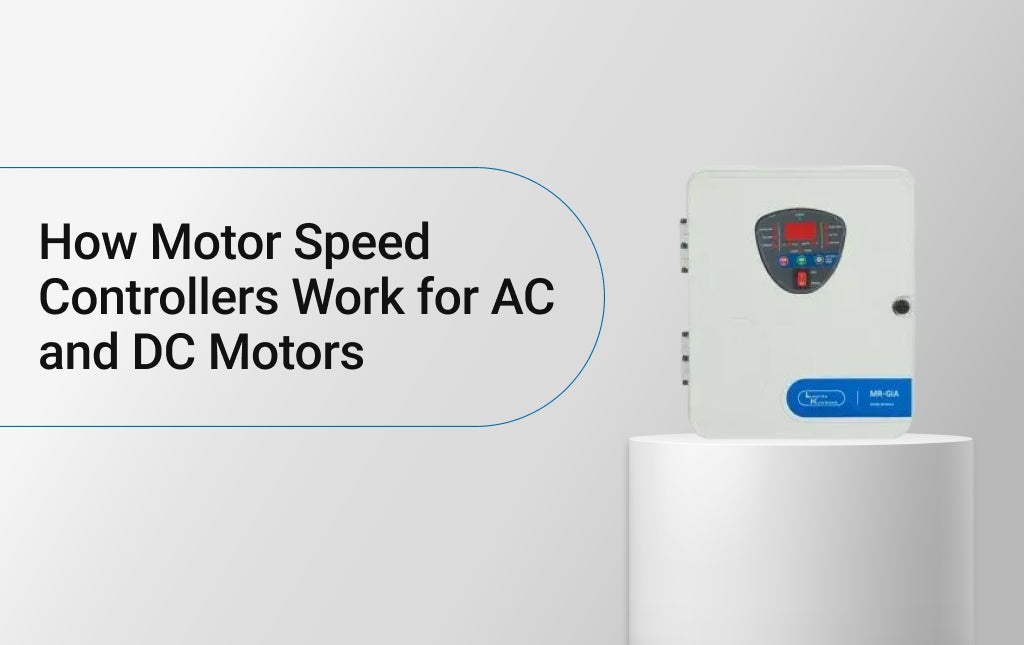
How Motor Speed Controllers Work for AC and DC Motors?
Table of Contents
Motors are rarely meant to run at one fixed speed all day. In real situations, speed keeps changing. A fan doesn’t always need full airflow. A conveyor slows down when material piles up. A pump adjusts based on pressure. Running everything at maximum speed wastes energy and wears out equipment faster than necessary. This is where speed control comes in.
Instead of forcing motors to behave the same way all the time, controllers let them adapt. Over the years, speed control has moved away from mechanical tricks and into electronic systems that quietly manage power in the background. Understanding how motor speed controllers work for AC and DC motors isn’t just for engineers anymore. Anyone dealing with installation, maintenance, or upgrades benefits from knowing what’s happening behind the panel. Read this blog to learn all about how to control motor speed.
What is a Motor Speed Controller?
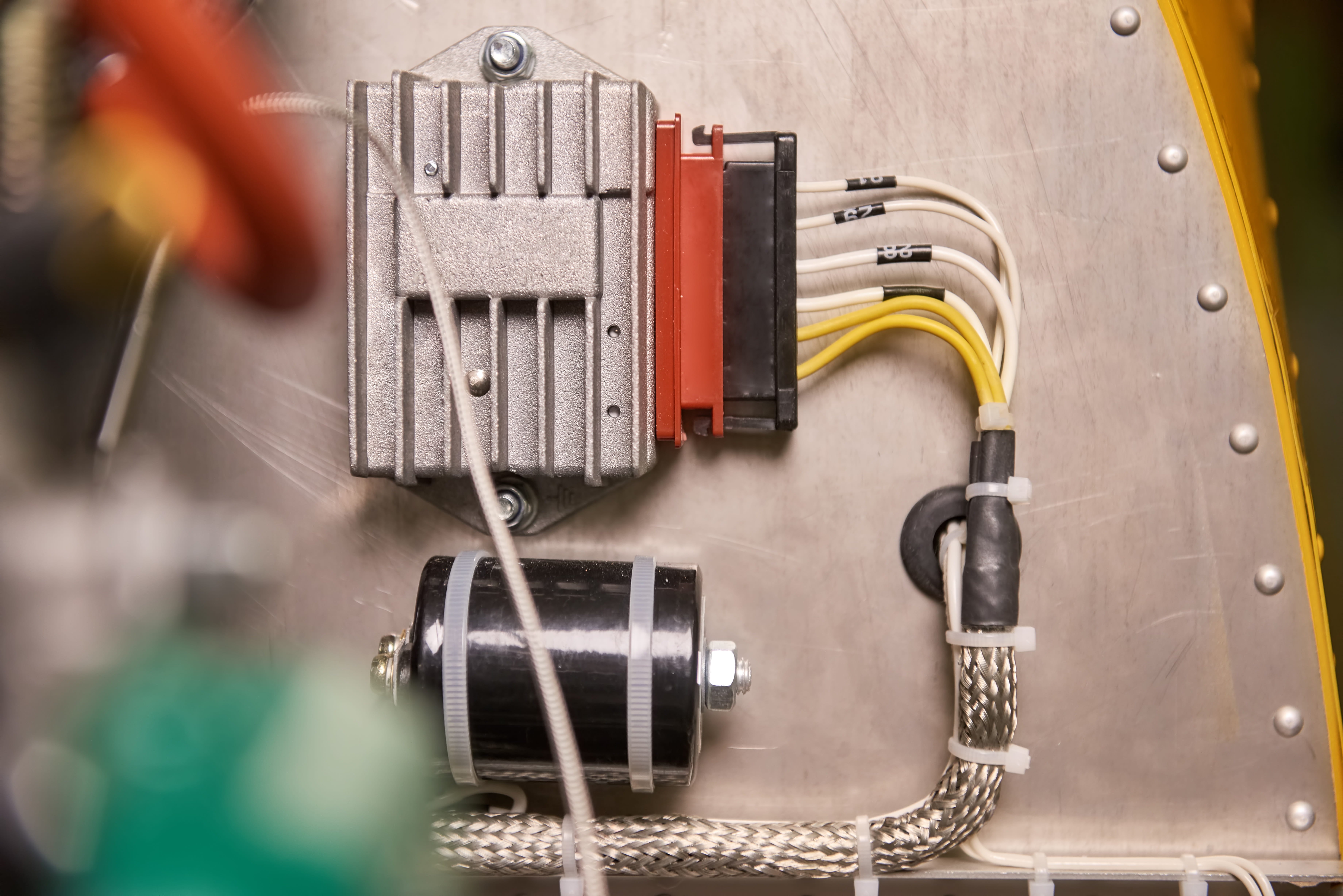
A motor speed controller is basically the decision-maker between the power source and the motor. Without it, most motors run at whatever speed the supply allows. With it, speed becomes adjustable, stable, and predictable even when the load changes.
The controller works by adjusting electrical input before it reaches the motor. In DC motors, that usually means controlling voltage or current. In AC motors, frequency becomes the main lever. Modern controllers rely on electronic components rather than mechanical parts, which is why today’s electric motor speed control systems are quieter, more efficient, and easier to maintain than older setups.
Types of Motor Speed Control
There isn’t one universal way to control motor speed. Different motors behave differently, and different applications demand different levels of control. This is why there are different types of motor speed control methods.
Voltage Control Method
Voltage control changes motor speed by increasing or decreasing supply voltage. When voltage drops, speed drops with it. This approach is common in DC motors and simple AC loads like fans. It’s easy to implement, but at low speeds torque suffers, which limits its usefulness in heavy-duty applications.
Frequency Control Method
Frequency control is the backbone of AC motor speed control. Motor speed depends directly on supply frequency, so changing frequency changes speed. Variable Frequency Drives use this principle. This method delivers smooth operation, better efficiency, and strong torque control, which explains why it’s so common in industrial environments.
Resistance Control Method
Resistance control slows motors by adding resistance into the circuit. It’s mostly associated with slip-ring induction motors. The downside is obvious- energy is wasted as heat. Because of that inefficiency, this method has largely faded from modern designs.
Electronic Switching Method
Electronic switching uses power devices to control how electricity reaches the motor. Pulse Width Modulation is a good example. Instead of wasting energy, the controller rapidly switches power on and off, adjusting average voltage. This approach allows precise control and high efficiency, making it standard in modern motor speed control methods.
How to Control Speed of DC Motor?
DC motor speed control is generally easier compared to AC motors because speed is directly related to voltage and current. This simplicity makes DC motors popular in applications requiring precise speed adjustment. Below is a detailed explanation on how to control speed of DC motor.
Armature Voltage Control
Changing armature voltage is the most common DC speed control method. Increase voltage, speed increases. Reduce voltage, speed drops. It’s smooth, predictable, and widely used in industrial and mobile applications.
Field Flux Control
Field flux control adjusts the magnetic field strength. Weakening the field increases speed, while strengthening it reduces speed. This method is often used when speeds above the rated value are needed.
PWM-Based Control
PWM controls speed by switching supply rapidly rather than wasting energy as heat. The motor responds to average voltage. This method is efficient, compact, and widely used in robotics, electric vehicles, and compact controllers.
Series Resistance Control
This older method uses resistors to reduce speed. It works, but energy loss and heat generation make it impractical for modern systems except in low-power situations.
How to Control Speed of AC Motor?
AC motor speed control is more complex because AC motor speed depends on supply frequency rather than voltage alone. Traditional AC motors ran at fixed speeds, but modern controllers have changed that limitation. Below is a detailed explanation on how to control speed of AC motor.
Frequency Variation Method
Changing supply frequency directly changes motor speed. Variable Frequency Drives make this possible and are now standard in industrial installations. They allow smooth acceleration and deceleration, reduce mechanical stress, and significantly improve energy efficiency in continuous-duty applications.
Voltage-to-Frequency (V/F) Control
V/F control keeps voltage and frequency in balance. This prevents overheating and maintains usable torque across different speeds, making it suitable for general-purpose systems. It is widely used because it offers reliable performance without complex feedback systems or advanced control algorithms.
Pole Changing Method
Changing the number of stator poles alters synchronous speed. This provides only fixed speed steps, not smooth control, so it’s used only in specific cases. Such arrangements are commonly found in applications where only two or three operating speeds are required.
Slip Control Method
Slip control adjusts rotor resistance in slip-ring motors. It’s effective during starting but inefficient for continuous speed control. Excess energy is lost as heat, which limits its practicality in modern energy-conscious motor installations.
Motor Speed Control Circuit Basics
When people talk about a motor controller, they often imagine one smart device doing everything. In reality, it’s more like a small group of parts sharing the workload. Each one does something simple, and together they keep the motor behaving the way you expect. Below are the components of a motor speed control circuit.
Power Supply Section
This part doesn’t get much attention, but everything depends on it. The controller needs steady power to stay sane. Sometimes that means converting AC to DC, sometimes just cleaning things up. If this section is unstable, nothing else feels reliable.
Control Logic Section
This is where decisions happen. It listens to whatever input is given, maybe a knob, maybe a signal, and figures out what the motor should do next. It doesn’t touch the motor directly. It just decides and passes the word along.
Power Switching Devices
These are the parts that actually deal with the muscle. MOSFETs or IGBTs take the instructions and translate them into real power changes. They switch fast, quietly, and constantly. When something goes wrong here, the motor’s behaviour usually tells you immediately.
Feedback and Protection Components
This section just watches. Speed, current, temperature- nothing dramatic. Most of the time it does nothing at all. But when something drifts too far, it steps in before damage happens. You only notice it when it saves you from a bigger problem.
Motor Speed Control Methods in Practice
There isn’t a single correct way to control motor speed. What works perfectly in one setup can feel unnecessary or overcomplicated in another. Most choices come down to how much precision is needed and how much variation the system can tolerate.
Open-Loop Control: This approach doesn’t really look back once it sets a speed. The motor runs at whatever level it’s told to, even if the load changes later. It’s simple, cheap, and often good enough where small speed drops don’t matter much.
Closed-Loop Control: Here, the system keeps checking itself. Speed is constantly compared against what was asked for, and small corrections happen all the time. It takes more effort to set up, but the result feels noticeably steadier when conditions aren’t predictable.
Manual Control: Sometimes a person is the controller. Speed is adjusted by hand, based on feel or experience. This still works fine in many basic machines where changes are occasional and don’t need automatic correction.
Automatic Control: In more advanced setups, speed adjusts on its own. Sensors watch what’s happening, software reacts, and the motor responds without waiting for anyone to intervene. This is common where consistency matters more than simplicity.
Applications of Motor Speed Controllers
Once you start noticing speed control, it’s hard not to see it everywhere. Any system that needs smoother motion or better efficiency usually ends up relying on it.
Household Applications
Everyday appliances quietly use speed control to feel more comfortable. Fans don’t blast air constantly, mixers don’t jump to full speed instantly, and machines last longer because they aren’t stressed unnecessarily.
Industrial Applications
In factories, speed control is less about comfort and more about control. Conveyors slow down, pumps adjust output, and machines stay in sync with the process instead of fighting it.
Commercial Applications
In large buildings, controlled speed makes systems feel calm rather than abrupt. Elevators don’t jerk, airflow feels steady, and equipment runs without drawing attention to itself.
Automotive and Robotics
Here, speed control becomes critical. Small changes matter. Movement needs to be predictable, repeatable, and safe. Without accurate control, these systems simply wouldn’t behave the way they are expected to.
Also Read: What is a Motor Driver? Types and Importance
Conclusion
Motor speed controllers changed the way motors behave in real systems. Instead of running blindly at one speed, motors now respond to load, environment, and demand. Whether controlling voltage in DC motors or frequency in AC motors, speed control improves efficiency, reduces wear, and extends equipment life. Understanding these systems makes it easier to choose the right controller and avoid problems long after installation. Explore the SmartShop of Lauritz Knudsen Electrical & Automation for the best motor speed controllers and motor starter collection.
FAQ's
Q1. Do speed controllers actually help motors last longer, or is that just theory?
Ans: From what people see on the ground, motors that don’t slam into full speed every time tend to age better. Softer starts and gradual changes mean less shock on bearings and couplings, even if nobody notices it day to day.
Q2. Everyone says speed control saves energy- is that always true?
Ans: Not in every situation. Fans and pumps usually show clear savings when slowed down. Other machines don’t always save much power, but they still benefit from smoother operation and fewer mechanical surprises.
Q3. Can the same controller be reused if the motor is changed later?
Ans: Sometimes yes, sometimes absolutely not. It depends on ratings and motor type. People often assume controllers are flexible, but mismatches show up later as heat, noise, or unstable behaviour.
Q4. Why do people complain about noise when speed controllers are installed?
Ans: It’s usually not mechanical noise. The fast switching inside controllers can introduce electrical interference. This is why grounding and layout suddenly start mattering more than they did before.
Q5. When something fails in a speed-controlled system, what usually goes first?
Ans: Most of the time it isn’t the motor. It’s connectors, cooling fans, or power electronics dealing with heat and dust. Poor airflow and cramped panels shorten lives faster than bad design.
Comments