
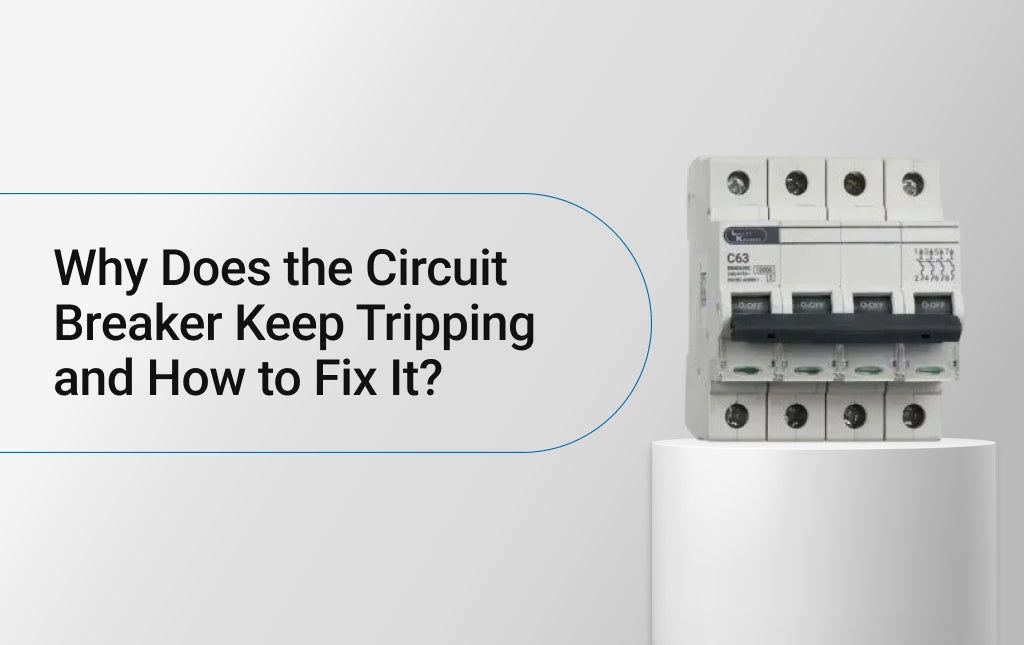
Why Does the Circuit Breaker Keep Tripping and How to Fix It?
A circuit breaker protects your electrical system from damage and fire hazards by shutting off power when something goes wrong. However, repeated tripping can be frustrating and confusing. Many people wonder why circuit breakers keep tripping, especially when using normal appliances. Understanding how breakers function and identifying the causes of circuit breaker tripping helps you prevent safety risks. Whether it’s overload, faulty wiring, or equipment failure, knowing the solution ensures safety. Learning what is circuit breaker operation and protection behavior helps homeowners and technicians maintain reliable electrical systems and avoid frequent interruptions that affect productivity and safety daily.
Table of Contents
• How does a Circuit Breaker trip?
• Circuit Breaker trip characteristics
• Why does Circuit Breaker keep tripping?
What is a Circuit Breaker?
To understand what is circuit breaker, think of it as a protective device that automatically stops electricity flow during unsafe conditions. It prevents overheating, electrical fires, and equipment damage by interrupting excessive current. The most commonly used type is the MCB Circuit Breaker, which protects household and commercial circuits efficiently.
Circuit breakers monitor current continuously. When abnormal current flows, the breaker disconnects power instantly. This safety mechanism prevents serious damage. The MCB Circuit Breaker is designed for repeated operation without replacement. Understanding breaker operation helps improve safety, prevent hazards, and ensure reliable performance in modern electrical systems used in homes and industries.
How does a Circuit Breaker trip?
Understanding how a circuit breaker trip helps explain its protective function. Breakers detect abnormal current and disconnect power automatically. The process depends on overload, short circuits, or faults. Many people confuse protection behavior with how to trip a circuit breaker, but breakers operate automatically based on electrical conditions and internal protective mechanisms safely.
Thermal Protection Mechanism
Thermal protection operates when excessive current flows for extended periods. The breaker contains a bimetal strip that heats and bends when overloaded. This movement disconnects contacts and stops current flow. This process explains how a circuit breaker trip under overload conditions. Thermal protection prevents overheating and equipment damage. This protective feature improves safety. Breakers use thermal protection to ensure electrical systems remain safe during continuous overload conditions in homes and industrial systems worldwide safely.
Magnetic Protection Mechanism
Magnetic protection responds instantly to severe faults like short circuits. A strong magnetic field forms when excessive current flows suddenly. This magnetic force moves internal components and disconnects the circuit immediately. This fast reaction prevents serious damage. Understanding magnetic operation helps explain how to trip a circuit breaker under fault simulation. Magnetic protection ensures rapid disconnection. This protects wiring, equipment, and electrical systems from damage caused by sudden current surges and dangerous electrical faults safely.
Combined Protection Operation
Modern breakers combine thermal and magnetic protection. This ensures protection under different fault conditions. Thermal protection handles overload. Magnetic protection handles sudden faults. These combined mechanisms define circuit breaker trip characteristics. This combination improves safety and reliability. Breakers respond differently depending on fault severity. Combined protection ensures electrical systems operate safely and prevents damage caused by overload or short circuit conditions in homes, industries, and commercial electrical installations worldwide safely.
Automatic Fault Detection System
Breakers continuously monitor current flow. They detect abnormal current instantly. When unsafe conditions occur, they disconnect power. This explains how a circuit breaker trip automatically. Automatic protection improves electrical safety. This system prevents equipment damage. Breakers ensure reliable operation. Automatic detection helps prevent serious hazards. This protection ensures electrical systems remain safe and reliable during abnormal operating conditions and electrical faults in modern electrical installations worldwide safely every day.
Circuit Breaker trip characteristics
The circuit breaker trip characteristics define how breakers respond to faults. These characteristics determine speed and sensitivity. Understanding these features helps ensure proper protection. Breakers follow predefined performance curves. These curves help identify response time. Understanding circuit breaker trip curves improves safety and ensures proper breaker selection for reliable electrical system protection worldwide safely today.
Instantaneous Trip Response
Instantaneous tripping occurs during severe faults like short circuits. The breaker disconnects power immediately. This prevents serious equipment damage. Fast response protects electrical systems. Instantaneous protection improves safety. These responses follow specific circuit breaker trip curves. These curves define fault response behavior. Instantaneous protection ensures reliable operation and protects electrical systems from dangerous current surges and severe fault conditions in homes and industrial systems safely worldwide today.
Time Delay Trip Response
Time delay tripping allows temporary overload without immediate disconnection. This prevents unnecessary interruptions. Breakers respond gradually depending on overload duration. This behavior follows circuit breaker trip characteristics. Time delay improves system reliability. This allows equipment to operate safely during temporary overload conditions. Proper delay ensures safe protection and prevents false tripping during normal operating conditions in electrical systems safely worldwide today.
Trip Curve Performance Evaluation
Trip curves define breaker performance during faults. These curves help engineers select proper breakers. The circuit breaker trip time calculator helps determine trip duration. This improves system safety. Trip curves show how quickly breakers respond. Accurate calculations ensure reliable protection. Understanding these curves improves breaker selection and electrical system safety in industrial and residential applications worldwide safely every day.
Why does Circuit Breaker keep tripping?
Many people ask why circuit breakers keep tripping repeatedly. This usually indicates overload, wiring faults, or equipment issues. Understanding the causes of circuit breaker tripping helps identify the problem. Frequent tripping prevents damage and protects electrical systems. Proper diagnosis ensures safe operation and prevents electrical hazards in residential and industrial electrical installations safely worldwide.
Circuit Overload
Circuit overload occurs when too many appliances draw power from one circuit. Excessive current causes overheating. The breaker disconnects power automatically. This protects the system. Overload is one of the main causes of circuit breaker tripping. Reducing load prevents repeated tripping. Proper load distribution improves safety. Preventing overload ensures safe operation and protects electrical systems from overheating and damage in homes and industrial environments safely.
Short Circuit Fault
Short circuits occur when wires touch improperly. This causes sudden current surge. Breakers disconnect power instantly. This prevents fire and damage. Short circuits are dangerous. Breakers respond quickly. Short circuit protection follows circuit breaker trip curves. These curves define response speed. Proper protection ensures safe operation and prevents serious electrical damage and safety hazards in electrical systems worldwide safely today.
Ground Fault Condition
Ground faults occur when current flows through unintended paths. This creates unsafe conditions. Breakers detect faults and disconnect power. Ground faults are dangerous. These faults are common causes of circuit breaker tripping. Proper grounding improves safety. Breakers protect against electrical shock. Fault protection ensures safe electrical system operation in residential and industrial environments worldwide safely today.
Faulty Breaker or Wiring
Old breakers or damaged wiring can cause repeated tripping. Faulty components cannot operate properly. The breaker may trip unnecessarily. Inspecting wiring helps identify faults. Replacing damaged breakers improves reliability. The MCB Circuit Breaker provides reliable protection when functioning properly. Proper maintenance improves safety. Reliable breakers ensure safe operation and prevent electrical system failure worldwide safely today.
How to fix Circuit Breaker tripping?
Fixing tripping issues requires identifying the root cause. Proper diagnosis ensures safe repair. Understanding breaker protection helps resolve problems. The circuit breaker trip time calculator helps analyze breaker behavior. Correct repair improves safety. Proper troubleshooting prevents repeated tripping and ensures reliable operation in electrical systems safely worldwide today.
Reduce Electrical Load
Reducing load prevents overload. Disconnect unnecessary devices. Spread appliances across circuits. This reduces current demand. Proper load distribution improves safety. Reducing load prevents repeated tripping. Proper load management ensures safe operation. This prevents electrical damage and improves system reliability in residential and industrial electrical systems worldwide safely today.
Inspect Electrical Wiring
Damaged wiring can cause faults. Inspect wiring regularly. Replace damaged cables. Proper wiring improves safety. Fault detection prevents repeated tripping. Proper maintenance improves system reliability. Safe wiring ensures reliable operation. Inspecting wiring prevents electrical hazards and ensures safe electrical system operation worldwide safely today.
Replace Faulty Circuit Breaker
Faulty breakers must be replaced. Old breakers lose reliability. Installing new breakers improves safety. Proper breaker selection ensures protection. Reliable breakers improve electrical system performance. Replacement prevents repeated tripping. Proper installation ensures safe operation and protects electrical systems worldwide safely today.
Use Proper Breaker Rating
Using correct breaker rating prevents tripping. Underrated breakers trip frequently. Proper breaker selection ensures safety. The circuit breaker trip time calculator helps determine proper rating. Correct breaker improves reliability. Proper selection ensures safe operation and protects electrical systems worldwide safely today.
Also Read: MCB (Miniature Circuit Breakers) Guide - Types, Sizes, and Uses
Conclusion
Circuit breakers protect electrical systems from overload and faults. Understanding what is circuit breaker, its operation, and circuit breaker trip characteristics helps identify problems. Frequent tripping indicates overload, faults, or wiring issues. Proper troubleshooting improves safety.
Using reliable protection devices like MCB Circuit Breaker ensures safety and reliable performance. Understanding breaker protection helps prevent hazards and improve system reliability. For dependable circuit protection solutions, professionals and users can explore suitable products and electrical solutions available at the SmartShop of Lauritz Knudsen Electrical & Automation to ensure safe and efficient electrical system performance and long-term operational safety.
FAQs
Q1. Can a circuit breaker trip without load?
Ans. Yes, faulty wiring, moisture, or damaged breakers can cause tripping without load. Electrical faults inside circuits may cause unexpected breaker operation. Inspection helps identify the issue.
Q2. What is circuit breaker trip curves used for?
Ans. Trip curves help determine breaker response time. Engineers use them to select proper breakers. They ensure reliable protection and safe electrical system operation.
Q3. How to trip a circuit breaker safely for testing?
Ans. Testing requires controlled overload simulation by professionals. This helps verify breaker operation. Proper testing ensures reliable protection and system safety.
Q4. How accurate is a circuit breaker trip time calculator?
Ans. Trip time calculators help estimate breaker response. They improve breaker selection accuracy and ensure reliable protection in electrical systems.
Q5. What are circuit breaker trip characteristics used for?
Ans. Trip characteristics help determine breaker behavior during faults. They improve protection and ensure safe electrical system performance.
Comments