
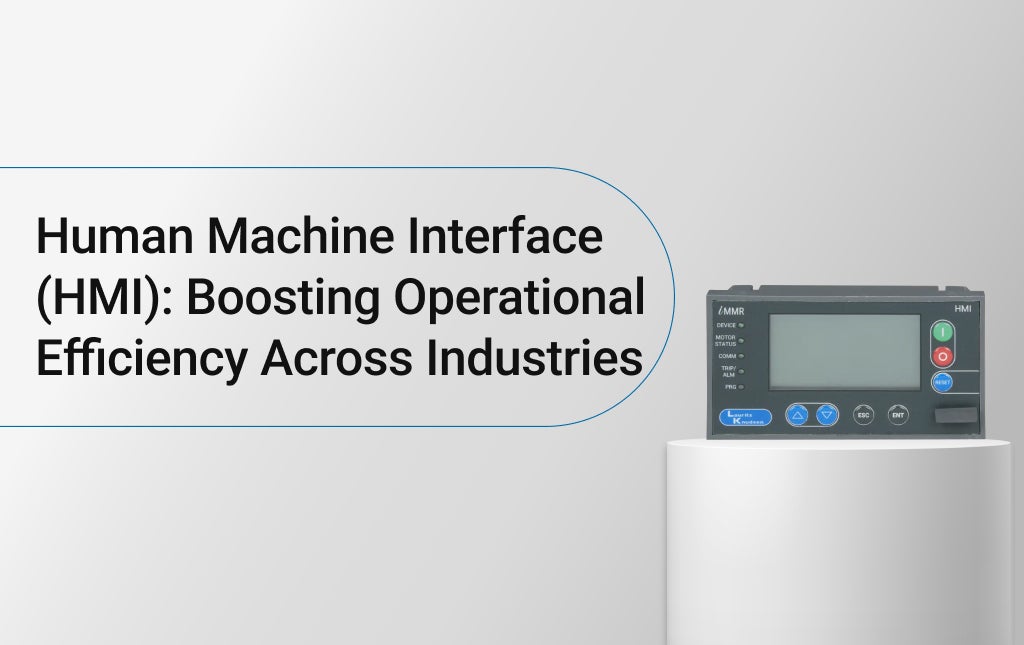
Human Machine Interface (HMI): Boosting Operational Efficiency Across Industries
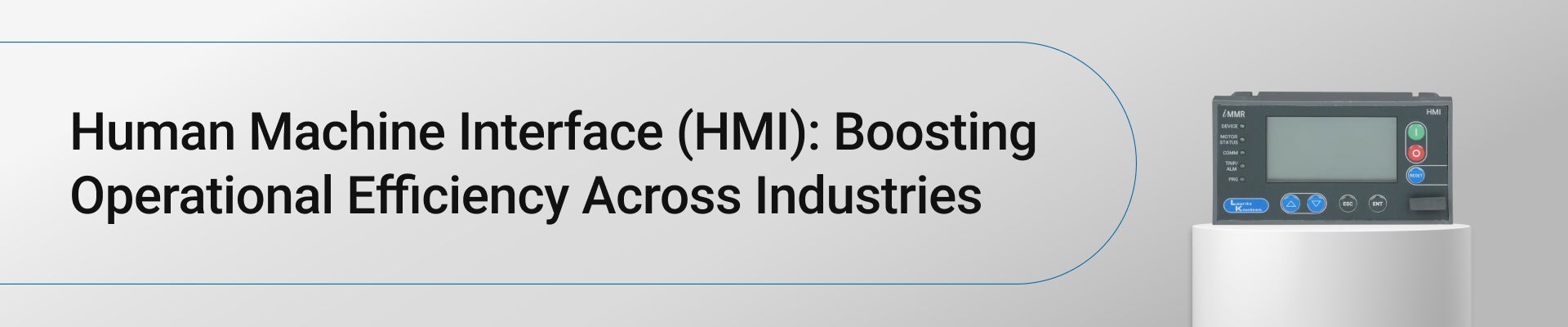
The Human Machine Interface (HMI) is one of the modern components that has emerged to track and monitor ever-increasing levels of complexity in machinery in industries like energy, manufacturing, to name a few. The HMI system provides functionality that allows users to manipulate machines and also facilitates process monitoring. Businesses today are aspiring to reap more productivity, safety, and data transparency, which brings the role of HMI interfaces into the limelight.
Table of Contents
- What is a Human Machine Interface?
- Changes in the Development of HMI Systems Over the Years
- Major Parts of an HMI System
- Applications of Human Machine Interface Across Industries
- Advantages of Human Machine Interface
- Types of HMI Devices
- Customisation in HMI Interfaces
- HMI and Automation: An Ideal Combination
- Temperature Control System Human Machine Interface
- Advancements in HMI Technology
- Conclusion
What is a Human Machine Interface?
In simplest terms, a Human Machine Interface is a user interface or dashboard that relates to a particular person who operates or controls a particular machine or system. It provides real-time data as well as control for human operators and CPUs, which translates into reduced response times and better performance. An HMI device could be anything from a touchscreen panel to a GUI (Graphical User Interface) based industrial computer.
Data display remains one of the most important functions of HMI systems today however, modern HMI systems are equipped with data processing, alarm systems, and control systems associated with display processors, which makes them more vital in automation and control applications.
Changes in the Development of HMI Systems Over the Years
In the past, the monitoring and control of machines were performed using various switches, dials, and lights. The development of HMI panels brought about a shift by digitising control and visualisation into more user-friendly formats. Early HMIs incorporated basic controls with displays having a heavy reliance on text. Currently, they possess animated graphics, multi-touch capabilities, mobile access, and even cloud connections, setting a new standard for artificial intelligence in industry.
The integration of IoT devices and the advancement in software engineering have fully automated HMI control systems, turning them into repositories of predictive analytics, remote monitoring, client-specific customisations, further aiding in improving efficiency and, most crucially—decision-making.
Major Parts of an HMI System
A properly designed and functioning HMI system consists of, but is not limited to:
- Hardware (HMI Device or Panel): It consists of a monitor or display that is a touchscreen, located on the control or working station, or on the machine itself.
- Software (HMI Interface): Specialised graphical software for an application that edits, displays and controls at the user level.
- Connection: Connections drawn to Programmable Logic Controllers (PLC), sensors, and even industrial networks.
- Information Technology Software: Contain modern real-time data for metrics of performance, alarms, trends, historical sets of data, etc.
An operator is able to access the interface provided on the machine seamlessly, thus enabling him or her to monitor the various parameters of the machine and make any quick decisions in real time whenever needed to avert system failure.
Applications of Human Machine Interface Across Industries
Some simplified applications of HMI panels include the control of temperature and pressure, monitoring fluid levels, and guiding mechanical operations.
- Manufacturing: Operators utilize HMI Interfaces to monitor production lines, control robotic arms, and check on input and output in real-time.
- Energy and Utilities: Control room personnel depend on HMI systems to supervise turbine, substation, and distribution network operations.
- Food and Beverage: HMI panels aid in controlling temperature control systems as well as managing hygiene sensitive equipment for food safety.
- Oil and Gas: Advanced HMI control interfaces enhance the safety and efficiency of remote drilling operations.
- Automotive: HMI-based controls assist in the automation of assembly lines and QA processes.
In all these cases, the HMI system improves operational efficiency, safety, reduces downtime, and improves compliance with regulatory requirements.
Advantages of Human Machine Interface
Some of the most obvious advantages of Human Machine Interface are user convenience; however, it's worth noting that these advantages can be of big help in other areas as well. Some of them are given below.
- Enhanced Control and Visibility: Faster decision making because of better data reporting and visualisation.
- Minimised Downtime: Maintenance procedures are more optimised with set maintenance windows.
- Customisation and Scalability: Customisation of HMIs is possible for users, languages, or departments, and customisation can also take place based on the sophistication of the system.
- Improved Safety: Because of prompt feedback from the system, along with receiving alerts, the chances of human error are eliminated.
- Increased Efficiency: Enhanced workflows paired with centralised data lead to improvement in productivity across all operations.
The alignment of HMI systems with SCADA (Supervisory Control and Data Acquisition) systems expands these benefits further with more opportunities for data collection and analysis as well as remote monitoring.
Types of HMI Devices
- Touchscreen Panels: Used in manufacturing, these are mounted directly on the machines.
- Industrial PCs: Data-intensive operations requiring advanced control systems fit these computers best.
- Mobile HMIs: Allow monitoring of the system through a smartphone or tablet.
- Web-Based HMIs: These permit access through any standard browser, making them perfect for remote teams or field work.
A right HMI device is selected based on environmental conditions, knowledge and experience of the operator and the complexity of the system.
Customisation in HMI Interfaces
An HMI interface is more than just an HMI interface; it requires thoughtful consideration of the user’s needs. It should only provide the most relevant information, intuitive navigation, and colour-coded notifications. Engineers have the option of screen layout creation, control logic definition, user role control assignment, and specific functionalities of various user roles. Even newer models of HMI control panels permit the incorporation of video feeds, document viewers, and third-party analytics, which further adds to their usefulness.
This degree of customisation achieves greater satisfaction for users, lowers training duration, and improves operational productivity.
HMI and Automation: An Ideal Combination
HMI is paired with automation as a unit. Advancements in smart manufacturing and Industry 4.0 adoption increases the use of HMI control systems, which serve as a link between automation processes and human monitoring. They act as the control room for an automated factory and provide live updates on the status of the machines, and allow humans for immediate action in case of issues.
The presence of PLCs, DCS (Distributed Control Systems), etc, seamlessly integrate with the control units and ensure that HMIs are crucial in the entire automation framework.
Temperature Control System Human Machine Interface
Temperature control systems are of paramount importance in industries like pharmaceuticals, food processing, HVAC, and chemicals. Here, HMIs are responsible for:
- Enabling parameter temperature settings and adjustments by operators
- Providing a real-time view of temperature changes
- Maintaining records of temperature data for compliance purposes
- Reporting if temperature limits are exceeded
Especially in processes sensitive to climate change, an automatic temperature control system with HMI features enhances energy conservation and quality maintenance. In combination with an AC temperature control system, remote temperature setting, scheduled cooling cycles, and fault diagnostics can all be done from the HMI's centralised administrative console.
Advancements in HMI Technology
The rise of digital transformation across industries will undoubtedly lead to more connected, intelligent, and immersive HMI interfaces. Some trends include:
- Cloud Add-ons: Remote analytics and access via the cloud.
- AI with Predictive Maintenance: Proactive fault notifications and alerts.
- Gesture and Voice Commands: Interaction without physical contact in high-stakes settings.
- Augmented Reality (AR): Enhanced maintenance and steady-grade guidance for diagnostics.
These advancements will further enhance the Human Machine Interface benefits and contribute towards smarter, adaptive industrial ecosystems.
Calculation Of Return On Investment and Energy Savings
The cost value in terms of return on investment is lower when comparing the value of the soft starter with the overall savings in energy. This, paired alongside the value of maintenance from other systems deemed unnecessary, presents the greater picture of efficiency. Suppressing energy expenditure during peak periods unlocks the possibility of greater ROI within a reasonable timeframe.
Deploying a 3-phase soft starter in an industrial environment can result in efficiencies ranging from hundreds to even thousands of units being saved annually. The lower operational costs and improved efficiency also extend to smaller setups via single-phase motor soft starter solutions.
Also Read: A Comprehensive Guide Industrial Automation
Conclusion
In today's world of industrial and manufacturing operations, the Human Machine Interface (HMI) is certainly a necessity. Its implementation in communication between operators and machines increases safety, efficiency, and reliability; these three critical aspects all benefit from having HMI systems. The HMI interface can transform cumbersome tasks into order through touch or mobile dashboards using visuals and commands, not intuitive ones.
The applications and benefits of HMI devices are abundant and still growing, ranging from temperature control systems to high levels of automation. With ongoing modernisation in various industries across India and the rest of the world, human-machine interface panels will prove why they are vital in smarter, safer, more efficient, and modern processes.
Comments