Actuator
Actuator - Definition, Meaning & Uses
What is an Actuator?
Every machine that moves has something small inside it that actually makes it move. That little part is called an actuator. It’s not a flashy piece. Most people never notice it. But without it, nothing happens.
So what does it really do? An actuator takes some form of energy, usually electricity, but sometimes air or fluid pressure, and turns that into motion. The motion might be a straight push or pull, or a twist, or even a smooth sliding movement. It depends on the type.
In an automatic door, the actuator is what opens it. In a car, it’s what adjusts your seat or mirror. In a robot, it’s what makes the arms move. Without actuators, computers and controllers would just sit there, processing data with no way to act on it.
There are a few types. Electric actuators use current and magnets. Hydraulic actuators use pressurised fluid, giving them raw strength. Pneumatic actuators use air- lighter, faster, and great for quick motion. Different tools, same goal: convert energy into real-world movement.
This is why engineers call actuators the muscles of machines. The brain sends a signal, the actuator makes it happen.
Key Takeaways Of Actuator
An actuator receives a control signal and moves or controls a mechanism. It works on principles like electromagnetism or hydraulics. This device is critical for creating physical movement in machines or automated systems.
Applications of Actuator
Industrial Automation
Walk into a factory and listen. Every hiss, click, or steady hum is probably an actuator at work. They open valves, push conveyor belts, move robotic arms, and lift tools into place. A good actuator doesn’t get tired. It repeats the same motion hundreds of times a day, every day, with the same precision. This is what keeps an assembly line running.
Home Automation
Look around your house. Electric curtains? Reclining chair? Smart thermostat? Each one has a small actuator hiding inside. You tap a button or open an app, and somewhere, that little device turns electricity into motion. Quietly, reliably, without fanfare.
Electrical Systems
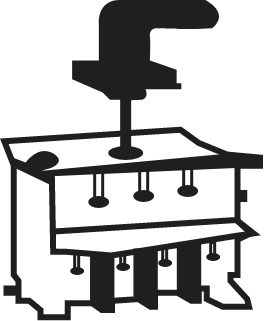
In power grids, actuators help open and close heavy automatic switches or circuit breakers Solar panels use them too- tiny motors that tilt and turn the panels to follow the sun. One small movement, multiplied thousands of times, can raise power output across an entire field.
Example and Use case of Actuator
Example: A linear actuator used in an automated assembly line pushes components into place during packaging. This is done when the actuator receives an electrical signal from the control system and translates it into straight-line mechanical motion.
Use Case: A motorized actuator installed in window blinds allows users to open or close them remotely via a smartphone app. When a signal is sent, the actuator moves the blinds to the desired position, improving convenience and energy efficiency.
Comparison: Actuator vs. Sensor
Actuators and sensors must not be confused with one another. Both these devices significant differ from each other.
| Feature | Actuator | Sensor |
|---|---|---|
| Function | Initiates Movement | Detects Conditions |
| Application | Monitor Control Systems | Monitoring and Feedback |
| Benefits | Enables Automation | Enhances Precision |
Is there anything else I need to know about Actuator
Modern actuators often include sensors inside them, so they can check their own position or adjust their power automatically. It’s like giving a muscle a bit of awareness. It knows when to stop, when to push harder, and when to rest.
They’re everywhere now. Robots in factories, solar trackers in farms, adjustable desks in offices. Every one of them needs motion, and motion always needs an actuator.
So next time something around you moves automatically, pause for a second. The small, silent part making it happen- is the actuator, quietly keeping the world in motion.
If you want to see how these components fit into automation and smart systems, explore Lauritz Knudsen Electrical & Automation SmartShop It’s where everyday motion starts to make sense.