




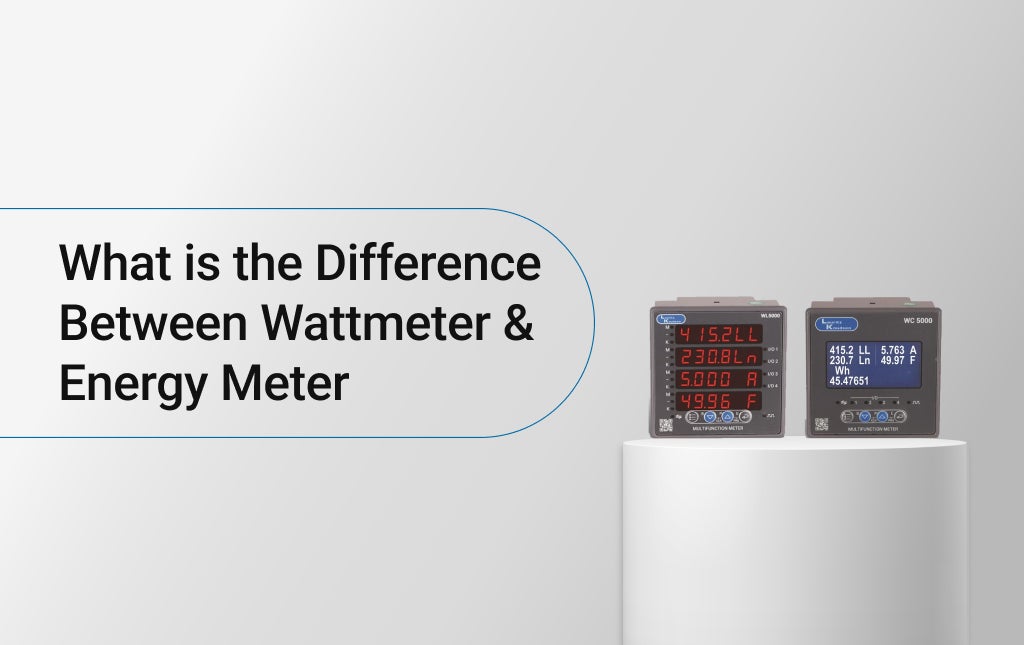
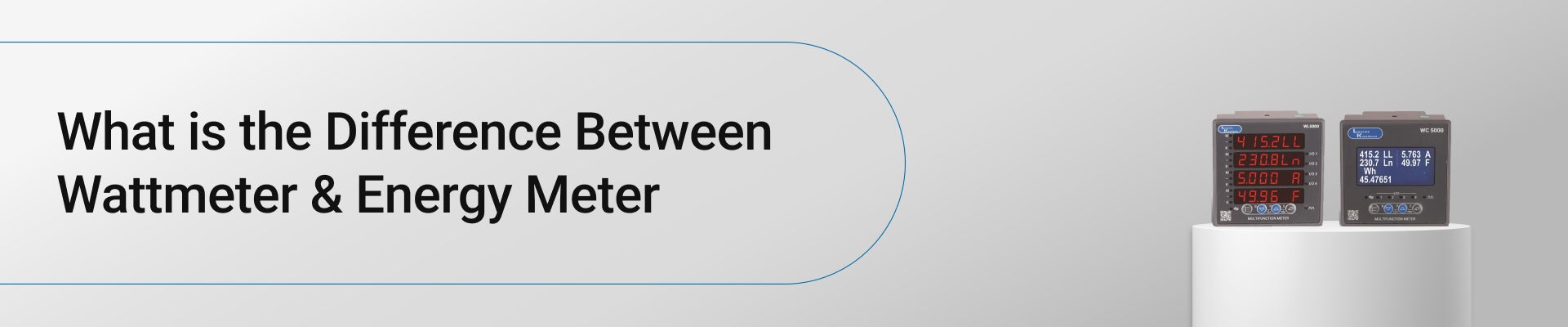
What is the Difference Between Wattmeter & Energy Meter
Electricity measurement sounds simple, until you realize there are different devices measuring different things. Two of the most commonly confused instruments are the wattmeter and the energy meter.
At first glance, they may seem similar. Both deal with electrical measurements, both are used in circuits, and both help monitor consumption. But here’s the catch, they measure entirely different parameters.
If you’ve been trying to understand the difference between wattmeter and energy meter, this guide will break it down clearly so you know exactly where each one fits.
Table of Contents
- What is Wattmeter?
- What is an Energy Meter?
- Wattmeter and Energy Meter: The Core Difference
- How Does a Wattmeter Work?
- How Does an Energy Meter Work?
- Application of Wattmeter
- Application of Energy Meter
- Why Both Devices Are Important
- Common Misconceptions About Wattmeter and Energy Meter
- Choosing the Right Meter for Your Needs
- How Lauritz Knudsen Smartshop Supports Accurate Energy Management
- Conclusion
- FAQs
What is Wattmeter?
Let’s start with the basics, what is wattmeter?
A wattmeter is an instrument used to measure electrical power in a circuit. Power is the rate at which electrical energy is consumed or generated. In simple terms, a wattmeter tells you how much power is being used at a given moment.
Wattmeter Use
The wattmeter use is mainly in situations where real-time power measurement is required. You’ll find wattmeters in:
- Electrical laboratories
- Industrial setups
- Testing environments
- Power analysis systems
For example, if you want to check how much power a machine is consuming right now, you use a wattmeter.
What is an Energy Meter?
Now let’s look at the other device, what is an energy meter?
An energy meter measures the total electrical energy consumed over a period of time. This is what you see on your electricity bill. So, while a wattmeter measures instantaneous power, an energy meter measures accumulated energy.
Energy Meter Use
The energy meter use is more common in everyday life. It is used in:
- Residential homes
- Commercial buildings
- Industrial facilities
Every time you check your electricity bill, the reading comes from an electric meter, which is essentially an energy meter.
Wattmeter and Energy Meter: The Core Difference
Now let’s get straight to the main point, the difference between wattmeter and energy meter.
1. What They Measure
- Wattmeter: Measures power (Watts)
- Energy Meter: Measures energy (kWh)
This is the most fundamental difference.
2. Time Factor
- Wattmeter: Measures power at a specific moment
- Energy Meter: Measures energy over time
So, if power is like speed, energy is like distance.
3. Usage Context
- Wattmeter: Used for testing and analysis
- Energy Meter: Used for billing and monitoring
4. Output
- Wattmeter: Displays instantaneous power
- Energy Meter: Displays total consumption
5. Placement
- Wattmeter: Used temporarily or in controlled environments
- Energy Meter: Installed permanently in buildings
Understanding these differences clears up most confusion around wattmeter and energy meter.
How Does a Wattmeter Work?
To understand what is wattmeter better, let’s look at how it works. A wattmeter measures power by considering:
- Voltage
- Current
- Phase angle (in AC circuits)
It typically has two coils:
- Current coil
- Voltage coil
These work together to calculate power.
Key Point:
Power = Voltage × Current (with adjustments for AC systems)
This allows the wattmeter to give accurate real-time readings.
How Does an Energy Meter Work?
Now let’s look at what is energy meter is from a working perspective. An energy meter calculates energy consumption using:
Energy = Power × Time
It continuously tracks power usage and adds it over time.
Modern Electric Meters
Today’s electric meter systems are mostly digital and offer:
- Real-time monitoring
- Accurate readings
- Remote data access
- Tamper detection
This makes them far more advanced than older mechanical meters.
Application of Wattmeter
The application of wattmeter is mostly technical and industrial.
Common Applications:
- Testing electrical equipment
- Measuring power in circuits
- Research and development
- Power factor analysis
Wattmeters are essential where precise, real-time power data is needed.
Application of Energy Meter
The application of energy meter is much broader.
Common Applications:
- Household electricity measurement
- Commercial billing systems
- Industrial energy monitoring
- Renewable energy systems
Energy meters are the backbone of electricity billing and consumption tracking.
Why Both Devices Are Important
It’s not about choosing between the two, they serve different purposes.
Wattmeter Helps You:
- Understand power usage instantly
- Optimize performance
- Identify inefficiencies
Energy Meter Helps You:
- Track overall consumption
- Manage electricity costs
- Monitor long-term usage
Together, they provide a complete picture of electrical usage.
Common Misconceptions About Wattmeter and Energy Meter
Let’s clear up a few things people often get wrong.
“They do the same job”
Not really. They measure different aspects of electricity.
“Energy meter can replace wattmeter”
An energy meter cannot provide real-time power data like a wattmeter.
“Wattmeter is used in homes”
Not typically. Homes rely on energy meters for billing.
Understanding these differences helps avoid confusion.
Choosing the Right Meter for Your Needs
If you’re working with electrical systems, choosing the right device matters.
Use a Wattmeter If:
- You need real-time power measurement
- You’re testing equipment
- You’re analyzing system performance
Use an Energy Meter If:
- You want to track consumption over time
- You need billing data
- You’re monitoring energy usage
Both devices have their place, depending on the requirement.
How Lauritz Knudsen Smartshop Supports Accurate Energy Management
Accurate measurement is the foundation of any efficient electrical system. Lauritz Knudsen Smartshop offers a range of advanced metering solutions, including modern electric meter systems designed for precise energy tracking. These products are built to deliver reliable performance across residential, commercial, and industrial applications.
Whether you’re looking to monitor consumption or improve efficiency, choosing the right metering solution plays a key role in managing energy effectively.
Also Read: Understanding the Core Functions of Energy Meters and Power Meters
Conclusion
Understanding the difference between wattmeter and energy meter comes down to one key idea, power vs energy. A wattmeter tells you what’s happening right now. An energy meter tells you what happened over time. Both are essential, but they serve different purposes. One helps in analysis and optimization, while the other supports monitoring and billing.
And when paired with reliable solutions from Lauritz Knudsen Smartshop, these devices help ensure that your electrical systems are not just functional, but efficient and well-managed.
FAQs
Q. What is the difference between wattmeter and an energy meter?
Ans. The difference between wattmeter and energy meter is that a wattmeter measures instantaneous power, while an energy meter measures total energy consumption over time. Both are used for different purposes in electrical systems.
Q. What is wattmeter and where is it used?
Ans. What is wattmeter? It is a device used to measure electrical power in a circuit. The wattmeter use is mainly in industrial setups, laboratories, and testing environments where real-time power measurement is required.
Q. What is an energy meter and why is it important?
Ans. What is an energy meter? It is a device that measures total electricity consumption over time. The energy meter use is essential for billing, monitoring usage, and managing electricity consumption in homes and industries.
Q. What are the applications of energy meters?
Ans. The application of energy meters includes residential billing, commercial monitoring, industrial usage tracking, and renewable energy systems. It is widely used wherever energy consumption needs to be measured.
Q. What are the applications of wattmeter?
Ans. The application of wattmeter includes power measurement in circuits, equipment testing, and performance analysis. It is mainly used in technical and industrial environments.
Comments