


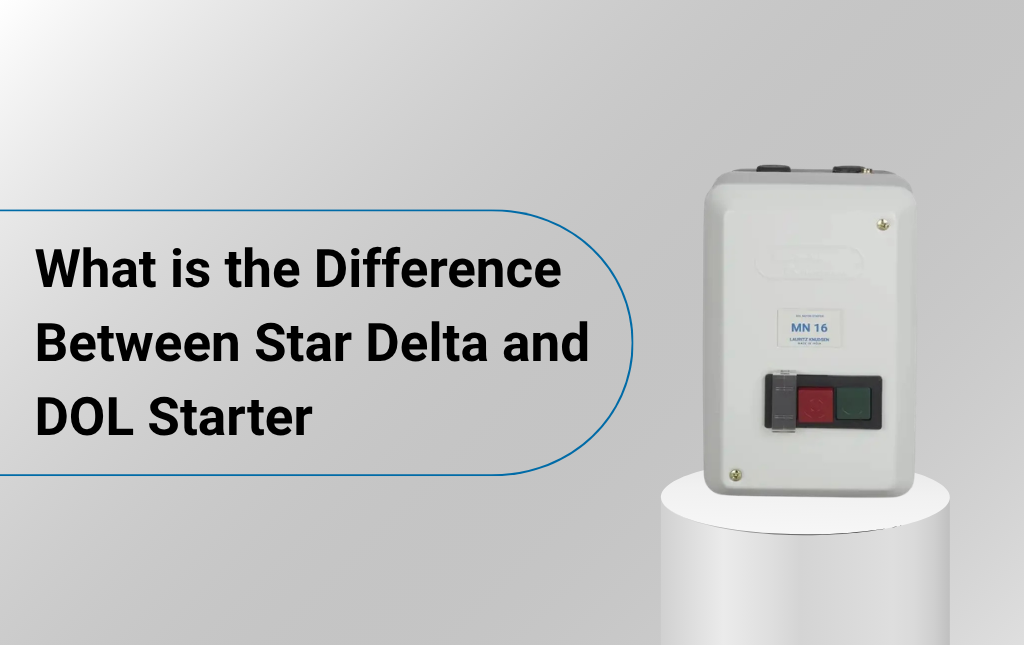
What is the Difference Between Star Delta and DOL Starter
Walk into any industrial setup, maybe a workshop, a water plant, or even a large building, and motors are quietly doing their job everywhere. But here’s something interesting: those motors don’t just “turn on” randomly. There’s always a control system behind them. And that’s where starters come in. Two names show up again and again- Star Delta and DOL starter.
At first glance, they might seem like just technical terms electricians throw around. But in reality, choosing the right one can impact motor life, energy usage, and even safety.
Starting a motor is like starting a heavy vehicle, doing it abruptly or gradually makes a difference. That’s exactly what separates these two starters.
Table of Contents
What is a Star Delta Starter?
A Star Delta starter is one of those clever engineering solutions that looks simple but solves a big problem- high starting current. When a motor starts, it can draw a massive surge of current, sometimes 6- 8 times its normal rating. That’s not ideal. Not for the motor, not for the system.
So, what happens here? The motor initially starts in a “star” configuration, which reduces voltage across each winding. Lower voltage means lower current. Once the motor gains speed, the system switches to a “delta” connection, allowing full voltage and normal operation.
This transition isn’t just about reducing current. It’s also about smoother mechanical stress. For example, in applications like conveyors or compressors, a sudden jerk can damage components over time. This is where the difference between Star Delta and DOL starter begins to show up clearly. Star Delta starters are more about controlled starting rather than brute force power delivery.
They do require more wiring and components, though. That’s the trade-off. But when used correctly, especially in medium to large motors, they extend equipment life significantly. Quietly. Efficiently.
What is a DOL Starter?
A DOL starter, or Direct-On-Line starter, is exactly what it sounds like- no complexity, no gradual ramp-up. The motor gets full voltage instantly. Simple. Direct. Effective.
In smaller setups, this works beautifully. Think of small pumps, fans, or workshop machines. They don’t need fancy starting methods because their power requirements are manageable. Flip the switch, and the motor runs. But here’s the catch, this instant connection causes a high inrush current. The sudden surge can stress electrical systems and even cause voltage dips. In large systems, this can affect other equipment too.
This is where the conversation of DOL starter vs Star Delta becomes relevant. A DOL starter is straightforward but aggressive. It doesn’t “ease” into operation. It jumps straight in. Still, simplicity has its own charm. Fewer components mean lower cost, easier maintenance, and less chance of failure. That’s why DOL starters are widely used in residential, agricultural, and small industrial setups.
In many cases, especially in a pumps starter controller, DOL starters are preferred because they are reliable and quick to operate without complex configurations.
Difference Between a Star Delta and DOL Starter
Understanding the difference between Star Delta and DOL starter is less about theory and more about behaviour. How a motor starts, how much current it draws, and how smoothly it operates- these small details make a big difference in real-world performance and system stability.
1. Starting Method
A Star Delta starter begins gently. It reduces voltage during startup and later switches to full power. On the other hand, a DOL starter applies full voltage instantly. This is the core of DOL starter vs Star Delta starter discussions. One is gradual, the other immediate. In real situations, that means less stress with Star Delta, but faster operation with DOL. It’s really about choosing between control and simplicity.
2. Current and Torque
Here’s where things get practical. Star Delta starters reduce starting current significantly, but they also reduce starting torque. DOL starters? High current, high torque- right from the beginning. So when comparing Star Delta and DOL starter, it comes down to application needs. Heavy loads might struggle with Star Delta initially, while DOL handles them better, but with electrical strain.
3. Complexity and Cost
A DOL starter is simple- fewer components, easy wiring, and lower cost. Star Delta starters, however, involve timers, contactors, and more connections. Naturally, this increases installation effort and cost. When evaluating what is the difference between DOL and Star Delta starter, complexity becomes a deciding factor. For smaller systems, DOL wins. For controlled, larger operations, Star Delta justifies the added setup.
| Feature | Star Delta Starter | DOL Starter |
|---|---|---|
| Starting Current | Reduced | High |
| Starting Torque | Lower | High |
| Complexity | High | Low |
| Cost | Higher | Lower |
| Application Size | Medium to Large Motors | Small Motors |
| Wiring | Complex | Simple |
Where to Use Star Delta Starter
Choosing where to use a Star Delta starter isn’t random. It depends on motor size, load conditions, and system sensitivity. In reality, these starters shine in environments where controlled starting is more important than speed or simplicity.
1. Industrial Machinery
Large machines like compressors, conveyors, and crushers benefit from Star Delta starters. Why? Because they reduce mechanical shock during startup. Imagine a conveyor belt suddenly jerking to life- it’s not ideal. A gradual start protects both the machine and the product being handled. This is where the difference between Star Delta and dol starter becomes practical, not just theoretical. Smooth operation often outweighs simplicity in such setups.
2. Electrical Systems with Load Sensitivity
In facilities where voltage stability matters, like hospitals or data centres, Star Delta starters help prevent voltage dips. Sudden high current draw can disturb sensitive equipment. That’s why Star Delta systems are preferred here. Compared to DOL starter, this setup is far more grid-friendly. It maintains balance and avoids disruptions, especially when multiple motors operate simultaneously.
Where to Use DOL Starter
DOL starters are everywhere. And there’s a reason for that. When the application doesn’t demand controlled starting, simplicity becomes an advantage. These starters are built for straightforward, reliable motor operation without unnecessary complications.
1. Small Motors and Pumps
For small pumps, fans, and mixers, DOL starters are ideal. They provide instant power without needing complex circuitry. In many agricultural setups, a pumps starter controller often uses DOL starters because they are easy to install and maintain. The discussion of DOL starter vs Star Delta starter doesn’t even arise here as DOL is simply more practical for such loads.
2. Low-Cost Installations
Budget constraints often drive decisions. DOL starters are economical and quick to deploy. In small workshops or residential systems, cost matters. When comparing DOL and Star Delta starter, affordability becomes a major factor. DOL wins here. It may not be sophisticated, but it gets the job done efficiently without overengineering the solution.
Advantages of Star Delta Starter
Star Delta starters bring a level of control that’s hard to ignore. They are not about speed. They are about protecting equipment and maintaining system balance. In many industrial scenarios, that’s exactly what matters most.
1. Reduced Starting Current
One of the biggest advantages is reduced inrush current. This protects electrical systems and prevents voltage drops. When comparing Star Delta and DOL starters, this benefit stands out clearly. Lower current means less stress on cables, transformers, and switchgear. Over time, this translates into fewer failures and more stable operation.
2. Longer Equipment Life
Smooth starting reduces wear and tear. Motors, belts, and mechanical components last longer because they are not subjected to sudden force. This is where DOL starter vs Star Delta comparisons lean heavily in favour of Star Delta. It’s not just about starting, it’s about long-term reliability and reduced maintenance costs.
Disadvantages of Star Delta Starter
Nothing is perfect. Star Delta starters come with their own set of limitations. While they offer control, they also introduce complexity and certain performance trade-offs that need to be considered carefully.
1. Lower Starting Torque
Reduced voltage means reduced torque. That’s the downside. Heavy loads may struggle to start under star configuration. This is where the difference between Star Delta and DOL starter becomes critical. If the load demands high initial torque, Star Delta may not be suitable without additional considerations.
2. Complex Installation
More components mean more wiring, more space, and more chances for errors. Installation and troubleshooting require skilled handling. Compared to DOL systems, Star Delta setups are less straightforward. This complexity can increase downtime if not managed properly.
Advantages of DOL Starter
DOL starters thrive on simplicity. No complicated transitions. No extra controls. Just direct power and immediate operation. And sometimes, that’s exactly what a system needs.
1. High Starting Torque
DOL starters deliver full torque instantly. This makes them ideal for loads that require immediate force to start. When comparing DOL starter vs Star Delta starter, this is where DOL clearly dominates. There’s no delay, no transition- just raw power from the beginning.
2. Easy Installation and Maintenance
Fewer components mean fewer problems. Installation is quick, and maintenance is minimal. In setups like a pumps starter controller, this simplicity is highly valued. There’s less that can go wrong, and troubleshooting becomes straightforward even in remote locations.
Disadvantages of DOL Starter
While DOL starters are simple, they are not always suitable. Their direct approach can create challenges, especially in larger or more sensitive systems.
1. High Inrush Current
The biggest drawback is the high starting current. This can stress electrical systems and cause voltage dips. In large installations, this is not acceptable. That’s why the conversation around what is the difference between DOL and Star Delta starter often highlights this limitation.
2. Mechanical Stress
Sudden startup means sudden force. Over time, this can wear down mechanical components. Belts, shafts, and couplings experience more stress compared to controlled starting methods. It’s effective but not always gentle.
Also Read: What is an Electric Starter? Types, Uses, and How They Work
Conclusion
Choosing between these two isn’t about which is better, it’s about what fits. Star Delta offers control and protection. DOL offers simplicity and strength. The right choice depends on the motor, the load, and the system environment.
For those looking to source reliable motor control solutions, platforms like Lauritz Knudsen SmartShop provide access to quality components designed for both performance and durability.
FAQs
Q. Can a Star Delta starter be used for all motors?
Ans. No, it is typically used for motors designed to run in delta configuration. Not all motors support this starting method.
Q. Why does a DOL starter cause voltage drops?
Ans. This is because it draws a high inrush current instantly, which can temporarily reduce voltage in the system.
Q. Is Star Delta starter energy efficient?
Ans. It reduces stress during startup, but overall energy efficiency depends on the motor and load conditions.
Q. Which starter requires more maintenance?
Ans. Star Delta starters usually require more maintenance due to additional components and wiring.
Q. Can DOL starters damage motors?
Ans. In larger motors, yes. Frequent high current starts can reduce motor lifespan over time.


Comments