


MCB (Miniature Circuit Breakers) Guide - Types, Sizes, and Uses
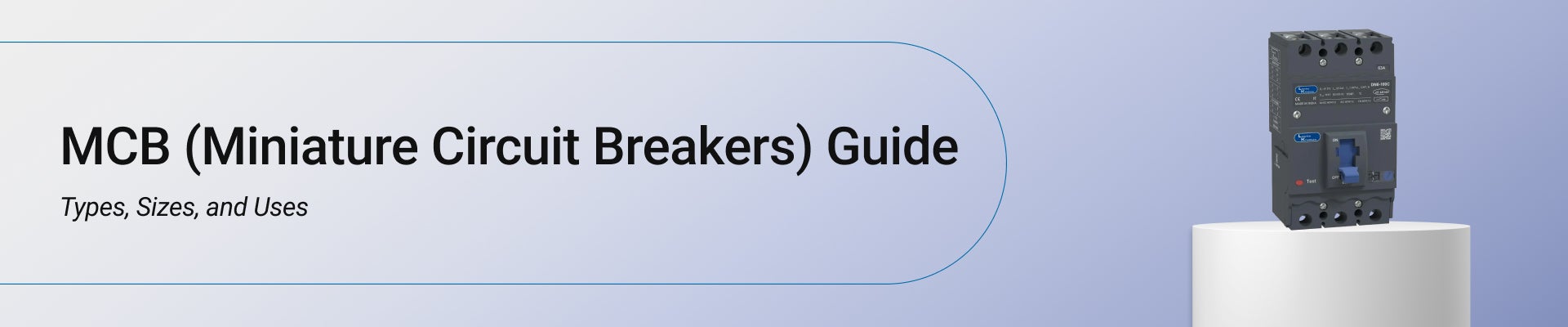
In electrical systems, Miniature Circuit Breakers (MCBs) play a pivotal role in safeguarding circuits from overloads and short circuits. This blog delves into the working principles, types, sizes, and uses of MCBs. Additionally, we will explore essential considerations for choosing the right MCB and highlight offerings from Lauritz Knudsen.
Table of Contents
- What are MCBs?
- Working Principle of Miniature Circuit Breaker (MCB)
- Different types of MCBs
- How Does a Miniature Circuit Breaker Work?
- Uses of MCBs
- Main Components of MCBs
- Application of MCB
- Function of MCB
- Advantages of MCB
- How to choose the right MCB?
- MCBs from Lauritz Knudsen
- Conclusion
- FAQ About MCB
What are MCBs?
MCBs are compact, electromechanical devices designed to protect electrical circuits from overcurrents. As an integral component of modern electrical distribution systems, MCBs are essential for preventing damage to appliances and electrical wiring caused by excessive currents.
Working Principle of Miniature Circuit Breaker (MCB)
The working principle of an MCB is based on the electromagnetic and thermal properties of its components. When the current flowing through the circuit exceeds the rated capacity of the MCB, it triggers a mechanism that rapidly interrupts the circuit, cutting off the flow of electricity. This dual-layered protection ensures MCBs respond to both short-circuit conditions and prolonged overloads.
• Thermal Trigger Mechanism : A bimetallic strip stays inside the device to handle overloads. Heat builds up when excess current flows. This causes the metal to bend and physically push the trip bar to open.
• Magnetic Tripping Action: Short circuits create a sudden surge of power. An internal magnetic coil generates a force that pulls the plunger instantly. This quick action disconnects the power to prevent any fire risks
• Manual Operation Feature: Users can flip the external switch to turn the power off or on. This manual handle also resets the internal lever after a fault occurs. It helps in basic circuit maintenance.
• Arc Extinction Chamber: When contacts separate, an electric arc forms between them. The arc runner pushes this spark into the splitter plates. This cools the arc and safely puts it out within the housing.
Different types of MCBs
Different types of MCBs are designed for specific electrical applications based on their tripping characteristics.
Types of MCB Based on Tripping Characteristics
Classification of these devices depends on how they react to different current levels. Understanding the function of MCB units helps you select the right curve for specific equipment. These ratings prevent nuisance tripping during normal surges or startup loads.
1. Type A MCB
This version is extremely sensitive and trips when the current exceeds the rated load by two or three times. It protects semiconductors or very delicate circuits. Engineers often debate how does MCB works here because the response time is nearly instant.
2. Type B MCB
This type trips at three to five times the full load current. It handles small surges well and remains popular for domestic lighting or heating circuits. People asking which MCB is best for home usually find this model the standard choice.
3. Type C MCB
Type C devices trip between five and ten times the rated current. They work for inductive loads like small motors or fluorescent lights, where higher inflow happens. The MCB working principle involves a magnetic coil that handles these quick, temporary spikes.
4. Type D MCB
These are heavy-duty units tripping at ten to twenty times the rated current. You see them in industrial settings with large transformers or X-ray machines. Such high tolerance is the main application of MCB hardware in heavy manufacturing plants.
5. Type K MCB
Type K units trip when the current reaches eight to twelve times the rating. They protect motors with high inrush currents while preventing false shutdowns. It is a specialized MCB miniature circuit breaker designed for specific industrial machinery and sensitive control circuits.
6. Type Z MCB
This is another highly sensitive category tripping at two to three times the load. It protects electronic devices like PLC controllers or computers from tiny overloads. Every component of MCB design here focuses on speed to save expensive silicon boards.
Types of MCB based on Number of Poles
The number of poles determines how many phases or wires the device can isolate simultaneously. Choosing the correct pole configuration ensures safety for the entire system. Different wiring setups require specific physical builds for proper circuit interruption and control.
1. Single-Pole MCB
A single-pole MCB unit protects only one live wire in a circuit. It is common in standard household lighting or socket loops. Users appreciate the advantages of MCB technology here because it occupies very little space in a small distribution board.
2. Double-Pole MCB
This double-pole MCB model switches both the live and neutral wires at once for extra safety. It provides complete isolation when a fault occurs in the system. Knowing the full form of MCB helps buyers realize this is still a compact protective device.
3. Triple Pole MCB
Used primarily in three-phase MCB power systems, this unit disconnects three live wires together. It ensures that if one phase fails, all three disconnect to protect motors. This setup is vital for industrial machinery that needs balanced power across all lines.
4. Four Pole MCB
The four-pole MCB version manages three phases plus the neutral wire for maximum security. It is essential in systems where neutral current might rise or cause issues. This device prevents electrical shocks during maintenance by breaking every single connection to the source.
Types of MCBs used in Electrical Protection Systems
Protection systems utilize various internal mechanisms to detect heat or magnetic fields. Some units combine these methods to offer better safety for modern buildings. Modern engineering allows these devices to respond to different types of electrical faults with high precision.
1. Standard MCB
The standard version uses a thermal-magnetic mechanism to handle both long-term overloads and sudden short circuits. It serves as the backbone for most modern wiring. Reliability is high because it reacts to both temperature changes and sudden massive magnetic spikes.
2. Magnetic MCB
Magnetic units rely on an internal solenoid to detect short circuits immediately. They do not use heat sensing, so they react faster to massive current surges. These are perfect for systems where protecting against wires touching is the only major concern.
3. Thermal MCB
This type uses a bimetallic strip that bends when it gets too hot from excessive current. It is excellent for protecting against slow overloads that might melt insulation. It provides a delayed response, which allows for very brief, safe power spikes.
4. Differential MCB
Differential units compare the current entering and leaving the circuit to find leakage. They are often used to prevent fire or shock from earth faults. This specialized protection ensures that even small imbalances trigger a shutdown to keep the environment safe.
How Does a Miniature Circuit Breaker Work?
Understanding how does MCB work involves looking at the internal response to heat and magnetism. The device acts as a gatekeeper for electricity. It monitors the current and shuts down the path when levels become dangerous for the wires.
1. Thermal Operation Mode
The device uses a bimetallic strip that bends when too much heat builds up. This heat comes from a steady overload of current over a period. As the strip bends, it releases a mechanical latch to open the contact points. This physical movement stops the flow of power safely.
2. Magnetic Tripping Action
During a sudden short circuit, a solenoid inside the unit creates a strong magnetic field. This field pulls a plunger that hits the trip lever instantly. This process happens in milliseconds to prevent explosive damage. It is the primary defense against massive surges that could cause electrical fires.
3. Arc Extinction Method
When contacts separate, a small spark or arc often forms between the metal points. The breaker pushes this spark into a stack of metal plates called an arc chute. These plates break the spark into smaller pieces until it disappears. This protects the internal parts from melting.
4. Manual Switching Logic
You can use the external toggle to turn the power off for maintenance. The internal mechanism ensures that the breaker will trip even if you hold the handle up. This safety feature is known as a trip-free mechanism. It prevents people from forcing a faulty circuit to stay on.
Uses of MCBs
MCBs find widespread application in residential, commercial, and industrial settings due to their versatility and efficiency. Some key uses include:
1. Residential Circuits
MCBs are very important in residential circuits to safeguard the circuits against overloading and short-circuiting. They instantly break off the circuit in situations when the current is high enough to cause fire or harm appliances. They help to increase home electrical safety by offering reliable, fast, and reusable protection that immediately isolates any fault in the circuit, reducing the risks associated with and preserving the safety of the residents’ home electrical system.
2. Commercial Circuits
MCBs are used in commercial circuits to protect electrical systems from overloads and short circuits. They instantly come to a stop to interrupt the current to a safe limit in case there is a likelihood of causing harm to the devices or increasing the risk of fire. MCBs give fast and stable responses, thus protecting people and maintaining business in offices, shops, and production facilities. The ability to reset and maintain them adds to the updating and adaptation, contributing to utility and necessity in today’s electrical security systems to protect people and possessions.
3. Industrial Circuits
MCBs provide great importance in industrial circuits for protecting electrical systems against overcurrents and short circuits. Since they are engineered to disconnect the electrical supply when the current is too high, they protect gears and lower fire hazards. MCBs enable the circuit to run without interruptions through the isolation of the defective part for maintenance.
Main Components of MCBs
The components of MCB design are built to be tough and very reliable over time. Each part has a specific job in the sequence of stopping a fault. High-quality materials ensure that the device does not fail when a dangerous surge occurs.
1. External Molded Housing
The outer shell is made from strong plastic that can resist high heat and impact. This casing keeps the internal parts aligned and protects users from electric shocks. It is designed to vent gases safely if a large arc occurs inside. The material does not catch fire easily.
2. Internal Bimetallic Strip
This part consists of two different metals bonded together that expand at different rates. When it gets hot from an overload, it curves to trigger the trip. This is a core part of the thermal protection system. It is calibrated to react at very specific temperature points for safety.
3. Magnetic Solenoid Coil
The coil is a wire wrapped around a metal core that reacts to high current. It creates the force needed for the full form of MCB to provide instant magnetic tripping. This component only moves during a massive surge, like a short circuit. It provides the heavy-duty protection needed.
4. Arc Chute Assembly
This consists of several parallel metal plates that cool and divide the electrical arc. It is essential for quenching the spark that happens during a trip. Without this part, the internal contacts would weld together from the heat. It ensures the breaker can be used many times safely.
Application of MCB
The application of MCB technology spans across houses and big factories to keep systems running. These devices protect lighting circuits and heavy motors from burning out. Engineers select different types based on the specific load requirements of the equipment being used.
1. Residential Power Boards
Most people wonder which MCB is best for home use when upgrading their panels. Usually, type B or C units work well for lights and standard wall sockets. They prevent wires inside the walls from overheating during daily chores. Every modern apartment relies on these for basic electrical safety.
2. Industrial Machine Safety
Factories use these breakers to protect heavy machinery from sudden voltage spikes. Large motors create big draws of power that need specific trip curves. The breakers ensure that a fault in one machine does not shut down the entire plant. This keeps production moving without any long interruptions.
3. Commercial Lighting Systems
Large office buildings have many rows of lights that require stable energy management. Breakers help divide these loads into smaller, manageable sections for easier control. If a bulb shorts out, only one area goes dark instead of the whole floor. This helps maintenance teams find the problem quickly.
4. Specialized DC Circuits
Some breakers work specifically with direct current found in solar panels or batteries. These units handle the unique challenges of stopping a DC arc, which is harder than AC. They protect the expensive inverters from backfeeds or ground faults. This ensures green energy systems remain safe and functional.
Function of MCB
The primary function of MCB units is to act as an automatic switch during abnormal conditions. It serves as a bridge between the main power source and your appliances. Breaking the connection, it saves the insulation of the wires from permanent heat damage.
1. Overload Current Control
When you plug in too many devices, the current exceeds the rated limit of the wire. The MCB miniature circuit breaker detects this slow rise and cuts the power. This prevents the cables from melting inside your walls. It is the most common task the device performs daily.
2. Short Circuit Defense
A short circuit happens when live and neutral wires touch each other directly. This causes a massive burst of energy that can be very destructive. The breaker senses this jump and opens the circuit faster than a human can blink. It stops the energy before it causes a fire.
3. Circuit Isolation Task
Maintenance workers use the breaker to isolate specific parts of a building for repair. It provides a visible gap in the electrical path for safety. This ensures no electricity reaches the area where someone is working. It is a vital tool for any electrician performing routine checks.
4. Equipment Life Extension
By preventing small surges from reaching your electronics, the breaker helps them last longer. Constant minor overloads can wear down the internal parts of a fridge or computer. The MCB working principle ensures that only clean and safe levels of power enter your devices. This saves you money on repairs.
Advantages of MCB
The advantages of MCB units in modern electrical setups remain quite clear for safety and ease. These small devices stop power flow during faults without needing wire replacements. Users enjoy better protection for expensive gadgets while maintaining a stable power supply at home.
1. Faster Tripping Response
A modern breaker reacts much faster than an old fuse when a fault occurs. This quick action prevents damage to your sensitive wires and appliances during surges. It detects small changes in current flow immediately. The speed of disconnection ensures that your building stays safe from fire risks.
2. Easy Restoration Process
When a circuit breaks, you simply flip a switch to bring power back. There is no need to handle messy wires or replace fuse links in the dark. This convenience makes it very user-friendly for every homeowner. You can identify the tripped circuit just by looking at the lever.
3. High Sensitivity Levels
These devices sense tiny leakage currents or overloads with great precision. This high sensitivity keeps the entire electrical network stable under varying loads. It prevents nuisance tripping while catching real dangers before they escalate. Modern engineering allows these units to monitor electricity flow with extreme accuracy and reliability.
4. Cost-Effective Protection
While the initial price is higher than fuses, the long-term savings are huge. You do not buy replacements every time a short circuit happens in the kitchen. The durability of the housing ensures the unit lasts for many decades. It is a smart investment for any property owner today.
How to choose the right MCB?
Choosing the right MCB involves considering several crucial factors to ensure optimal performance and safety. Here are essential considerations:
• MCB Choices by Ampere Rating: Selecting the appropriate ampere rating is crucial. The MCB's ampere rating should match the circuit's load requirements to provide effective protection without tripping unnecessarily.
• MCB Choices by Breaking Capacity: Breaking capacity, often expressed in kA (kiloamperes), indicates the maximum fault current an MCB can interrupt safely. Choosing an MCB with an adequate breaking capacity is vital for ensuring reliable protection.
• Consider the Type of Load: Different types of loads, such as resistive, inductive, or capacitive, can affect MCB performance. Understanding the nature of the load helps in selecting the appropriate MCB type.
• Coordination with Other Protective Devices: Ensure proper coordination between MCBs and other protective devices in the electrical system. This coordination enhances the overall reliability and efficiency of the protection scheme.
• Environmental Considerations: For installations in challenging environments, consider factors such as temperature, humidity, and dust. Choose MCBs with suitable specifications to withstand the environmental conditions.
• Budgetary Constraints: While prioritizing safety, consider budget constraints. There are MCB options available at various price points, offering a balance between cost and functionality.
MCBs from Lauritz Knudsen
Lauritz Knudsen is a trusted destination for acquiring high-quality electrical components, including a diverse range of MCBs. With a commitment to innovation and safety, Lauritz Knudsen offerings align with industry standards and cater to various application needs. For those seeking reliable MCBs, Lauritz Knudsen provides a seamless online shopping experience. Here are some notable features:
• Wide Range of Options: Lauritz Knudsen offers a diverse selection of MCBs, including different types and ampere ratings, allowing customers to find the perfect fit for their specific requirements.
• Quality Assurance: Lauritz Knudsen is synonymous with quality, and their MCBs adhere to stringent quality standards. Customers can trust the durability and performance of Lauritz Knudsen MCB offerings.
• Ease of Selection: The Smartshop platform simplifies the selection process, providing detailed product information and specifications. Customers can make informed decisions based on their unique needs.
• Convenient Online Purchasing: Embracing the digital era, Lauritz Knudsen allows customers to conveniently browse, select, and purchase MCBs online. This streamlined process enhances accessibility and expedites procurement.
Also Read: MCB Installation Guide: Home and Office
Conclusion
In conclusion, understanding the types, sizes, and uses of MCBs and considering critical factors for selection, individuals and businesses can ensure the safety and efficiency of their electrical systems. Lauritz Knudsen stands as a reliable source, offering quality MCBs that meet the diverse needs of modern electrical installations.
FAQ About MCB
Q. Which MCB is best for home use?
Ans. Type B and Type C units are the standard choices for residential buildings. Type B trips at lower surges and protects lighting or heaters. Type C handles slightly higher rushes from fans or fridges. Most experts suggest choosing a model that matches the specific power load of your room.
Q. How does an MCB work during overload or short circuit?
Ans. During an overload, a metal strip heats up and bends to break the flow. In a short circuit, a magnetic coil pulls a lever to snap the contacts apart instantly. This function of MCB keeps your wires safe from melting or sparking when the electrical demand becomes too high.
Q. What are the standard current ratings of MCBs?
Ans. Ratings usually start from 0.5A and go up to 125A for standard units. Common home sizes are 6A, 16A, and 32A. You must check the wire thickness before picking a rating. Using a high rating on thin wires is dangerous because the breaker might not trip during a small fire.
Q. What is the lifespan of an MCB?
Ans. A good unit can last for fifteen to twenty years if the environment stays dry. Frequent tripping from faults can wear out the internal springs and contacts much faster. It is wise to replace any unit that feels loose or shows signs of burn marks on the outer plastic casing.
Q. What is the full form of MCB?
Ans. The term stands for Miniature Circuit Breaker. It is a small electromagnetic device that acts as a switch. These units replaced old fuses because they are easier to reset. They provide a safe way to manage electricity in modern homes and small offices without needing to replace any parts.
Q. What is the Difference Between MCBs and MCCBs?
Ans. MCBs handle low currents up to 125 amps and are not adjustable. MCCBs manage much higher loads up to 2500 amps and often have settings you can change. You will find the smaller units in houses, while the larger ones are for heavy machines. They use different frames for heat.
Q. How can I test an MCB to see if it is working correctly?
Ans. You can use the manual toggle to check if the lever snaps firmly. A multimeter helps verify if the circuit closes and opens properly. Professional electricians use a primary injection test kit to simulate a fault. Regular testing ensures the safety of every single application of MCB in your panel.
Q. What is the difference between MCB and fuse?
Ans. A fuse uses a wire that melts and must be replaced after every fault. An MCB is a reusable switch that you simply flip back up. Breakers are more sensitive to small changes in current. They offer better safety because they disconnect all phases at once during a serious electrical failure.
Comments