

What Is an SF6 Circuit Breaker? Types, Advantages and Disadvantages
Summary
High voltage systems need a way to stop faults fast. That's where an SF6 circuit breaker comes in. The SF6 circuit breaker full form is Sulphur Hexafluoride Circuit Breaker. It uses gas to quench the arc when a circuit breaks. This guide covers SF6 circuit breaker working principle, types of SF6 circuit breakers, and SF6 circuit breaker advantages and disadvantages in plain terms. It also touches on the SF6 circuit breaker diagram and SF6 circuit breaker symbol used in drawings. Plus a simple SF6 circuit breaker maintenance routine.
Key Takeaways
- SF6 gas quenches the arc. This allows compact, reliable breaker design.
- These breakers suit medium to high voltage jobs, unlike a smaller MCB circuit breaker.
- Several types exist, built for different voltage ranges and site needs.
- Gas pressure and moisture checks form the core of routine upkeep.
- Handling needs care, since SF6 gas has real environmental and safety concerns.
Table of Contents
Introduction
Somewhere inside a substation, hidden behind a metal box, sits a breaker doing one of the most important jobs in the network. Stopping faults before they spread. For high voltage systems, that job usually falls to an SF6 circuit breaker. It's compact. It's reliable. And it handles voltages that would overwhelm a standard MCB circuit breaker without much effort. For example, one SF6 unit can protect a line carrying thousands of amps. You may not realise how much of that reliability comes down to one gas. This guide breaks down what that gas does and why it matters.
What is an SF6 Circuit Breaker?
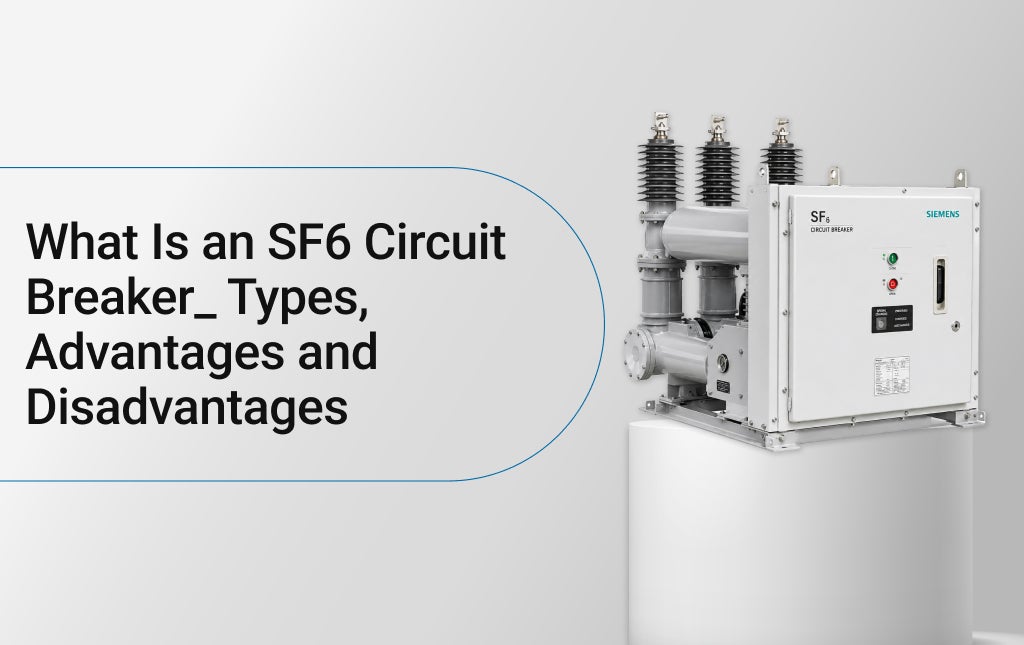
An SF6 circuit breaker is a switching device. It uses sulphur hexafluoride gas to put out the arc formed when contacts pull apart. Think about this: breaking a high voltage circuit makes an arc that can reach thousands of degrees. Left alone, that arc would keep current flowing and damage the equipment badly. SF6 gas has strong insulating and arc-quenching traits. That's exactly why it got picked for this job decades ago. In reality, few gases perform this well while staying stable under repeated switching. These breakers dominate substations and high voltage networks worldwide. Largely because SF6 handles both insulation and interruption in one compact package.
Key Components of SF6 Circuit Breaker
Every SF6 circuit breaker diagram relies on a handful of core parts working together. Each piece plays a set role in making, then putting out, the arc safely inside a sealed space.
Interrupter Unit
The interrupter unit holds the moving and fixed contacts, along with the SF6 gas around them. This is where the arc forms and gets put out. Its design directly shapes how well the breaker performs under fault conditions and repeat use over its service life.
Puffer Cylinder and Piston
The puffer part squeezes SF6 gas as contacts separate. This forces a high-pressure gas blast across the arc. This blast cools and calms the arc fast, letting it go out at the next current zero point. Puffer design sits at the core of how SF6 circuit breaker works well.
Operating Mechanism
The operating mechanism, often spring or hydraulic, drives contact movement when opening and closing. Speed and steadiness matter a lot here. A slow mechanism could delay the arc going out. Reliable mechanisms get tested again and again to confirm steady action across thousands of switching cycles.
Gas Monitoring System
SF6 performance leans heavily on gas pressure and purity. A monitoring system tracks these all the time. Pressure gauges and density switches warn operators if levels fall below safe limits. This watch matters, since low gas pressure cuts the breaker's ability to interrupt current directly.
SF6 Circuit Breaker Working Principle
Understanding the SF6 circuit breaker working principle means following the steps from normal operation through fault clearing. All of this happens within a fraction of a second once a fault is spotted.
Normal Current Flow
During normal operation, contacts stay closed. Current flows through them with little resistance. SF6 gas surrounds the contacts throughout, keeping insulation between live parts and the grounded box. Nothing dramatic happens here, which is exactly the point of steady operation.
Contact Separation and Arc Formation
A fault happens. A trip signal makes contacts separate fast. As they part, current keeps flowing briefly through the air gap, forming an arc. This is the key moment. The breaker's design decides whether the fault gets cleared safely and fast.
Gas Blast and Arc Extinction
As contacts separate, the puffer part forces high-pressure SF6 gas across the arc. This blast cools the charged gas fast. At the next natural current zero point, the arc goes out fully. The whole process usually finishes within a few cycles of the power frequency.
Post-Arc Insulation Recovery
After the arc goes out, SF6 gas quickly regains its insulating strength across the contact gap. This stops the arc from restriking. This fast recovery is one of SF6's standout traits, letting the breaker safely cut off the faulted section almost right away.
Types of SF6 Circuit Breakers
Not all SF6 circuit breakers share the same design. Different types of circuit breakers suit different voltage ranges and switching needs. This is shaped largely by how the gas gets pressed and pointed during operation.
Single Pressure Puffer Type
This is the most common design today. It uses one gas pressure system throughout. A mechanical puffer squeezes gas during opening to make the arc-quenching blast. Its simple build and steady results have made it the standard choice across most modern high voltage sites.
Double Pressure Type
Older designs used two separate pressure systems. Low pressure for insulation, high pressure for arc quenching, let out through a valve during operation. These have largely been phased out. They cost more to maintain and run compared to single pressure options available today.
Rotating Arc Type
This design uses a magnetic field to spin the arc fast around the contact face. This spreads heat and cuts down contact wear. It suits certain medium voltage jobs well, giving good results without needing the mechanical puffer action found in higher voltage designs.
Self-Blast Type
Self-blast breakers use the arc's own heat to build gas pressure. This cuts the mechanical force needed from the operating mechanism. This design allows smaller, less powerful mechanisms. That makes self-blast breakers popular in newer, more compact substation setups worldwide.
Advantages of SF6 Circuit Breakers
Weighing SF6 circuit breaker advantages and disadvantages starts with the real strengths that made this tech dominant across high voltage networks for decades.
Excellent Arc Quenching Capability
SF6 gas puts out arcs fast and reliably, even at high voltages and currents. This lets breakers clear faults quickly. That limits damage to connected gear and cuts the risk of long outages across the wider network.
Compact and Space-Efficient Design
SF6 handles both insulation and arc quenching. So breakers can be built smaller than older oil or air-based options. This matters a lot in city substations, where space is often tight and costly to expand.
Low Maintenance Frequency
Sealed SF6 systems see less contact wear than older breaker types, thanks to good arc control. This means longer gaps between big overhauls. It cuts both upkeep costs and the downtime needed for servicing.
Disadvantages of SF6 Circuit Breakers
Despite real strengths, SF6 breakers carry genuine drawbacks worth knowing. Especially as environmental rules around this gas keep tightening worldwide.
Environmental Impact of SF6 Gas
SF6 is a strong greenhouse gas, with a warming effect far higher than carbon dioxide. Leaks during use or disposal add to environmental harm. This has pushed many regulators to push alternative tech wherever practical.
Higher Initial Cost
SF6 circuit breakers usually cost more upfront than simpler options, like a standard MCB circuit breaker used in low voltage jobs. This higher cost comes from the special gas handling systems and precise engineering needed throughout manufacture.
Specialised Handling Requirements
Working with SF6 gas needs trained staff and specific gear for filling, watching, and disposal. Poor handling risks both safety issues and gas release into the air. This means sites need set steps that add complexity compared to simpler breaker types.
SF6 Circuit Breaker Maintenance Checklist
A set SF6 circuit breaker maintenance routine keeps these units running well for decades. Here are the key checks worth putting on a regular schedule across any SF6 site.
Gas Pressure Monitoring
Checking gas pressure often against the maker's specs catches slow leaks before they hurt performance. Automated density monitors can flag drops right away. This lets teams fix issues before the breaker's interrupting power gets weakened.
Moisture Content Testing
Moisture inside the gas space can react with SF6 byproducts formed during arcing, making corrosive compounds. Regular moisture tests catch this early. This protects internal parts from long-term wear that could otherwise cut the breaker's service life short.
Mechanical Operation Testing
Testing the operating mechanism confirms contacts move at the right speed when opening and closing. Slow or uneven action can point to wear or lube issues. Both need fixing before they hurt the breaker's ability to clear faults reliably.
Visual and Seal Inspection
Regular visual checks catch rust, damaged seals, or physical harm to the box before they lead to gas leaks. Seals in particular wear down over time. Catching wear early stops bigger, costlier repairs down the line.
Also Read: How to Select MCB for AC: Ampere Rating & Installation Guide
Conclusion
An SF6 circuit breaker plays a key role in keeping high voltage networks safe and reliable. It quietly clears faults that would otherwise cause serious damage. Knowing its parts, working principle, and upkeep needs helps facility teams get the most from this tech. If you are sourcing switchgear and related electrical gear, Lauritz Knudsen SmartShop is a practical starting point for exploring options suited to specific project needs.
FAQs
Q. Can SF6 gas be recycled after it's removed from a circuit breaker?
Yes, specialised recovery equipment can reclaim and purify SF6 gas for reuse, which helps reduce both cost and environmental impact.
Q. What voltage range typically uses SF6 circuit breakers?
These breakers commonly serve medium to extra high voltage applications, generally starting around 11kV and extending well beyond 400kV in transmission networks.
Q. Are there alternatives to SF6 gas being developed for circuit breakers?
Yes, several manufacturers are researching alternative gases with lower environmental impact, though widespread adoption is still gradually developing across the industry.
Q. How is an SF6 circuit breaker represented in a single line diagram?
It typically appears using a standard circuit breaker symbol, sometimes labelled to distinguish it from other breaker types like vacuum or air breakers on the same drawing.
Q. What happens if SF6 gas pressure drops too low during operation?
Most breakers include lockout features that prevent operation below a safe pressure threshold, protecting both equipment and personnel from unreliable arc interruption.
Comments