





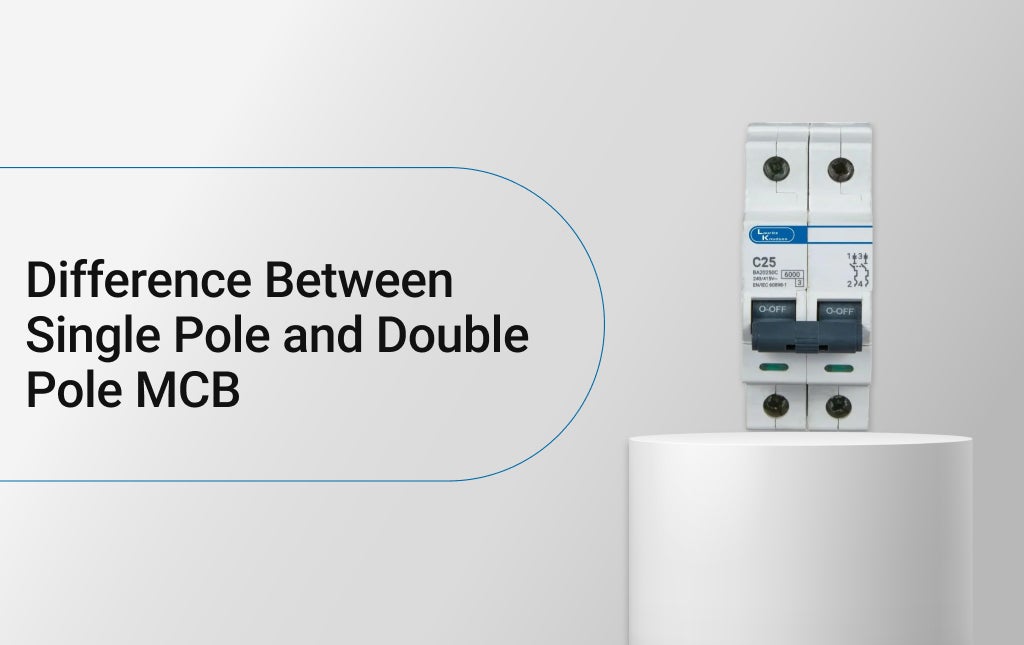
Difference Between Single Pole and Double Pole MCB
Summary
Choosing the right miniature circuit breaker isn't as simple as it looks, and getting it wrong can quietly affect equipment protection, maintenance routines, and overall electrical safety. This guide walks through the difference between single pole and double pole MCB, how each one actually works, where they're typically installed, and what to weigh up before picking the right protection for a residential, commercial, or industrial setup.
Key Takeaways
- Single-pole and double-pole MCBs provide the same core protection against overloads and short circuits, but they differ in how they isolate electrical circuits.
- A single-pole MCB disconnects only the live conductor, making it suitable for standard residential lighting, socket outlets, and other low-power circuits.
- A double-pole MCB disconnects both the live and neutral conductors simultaneously, offering complete circuit isolation for enhanced safety during maintenance.
- Choosing between a single-pole and double-pole MCB depends on the circuit design, load type, wiring configuration, and applicable electrical standards—not simply on current rating or cost.
- Double-pole MCBs are commonly used for dedicated appliances, water heaters, HVAC systems, and commercial installations where full isolation is required.
- Selecting the correct MCB with the appropriate current rating, breaking capacity, and tripping characteristics is essential for ensuring reliable electrical protection and long-term system safety.
Table of Contents
Introduction
Electrical protection devices tend to look almost identical from the outside, but what's happening inside them can be a completely different story. Selecting the right MCB, then, isn't just about matching a current rating and calling it done. It also comes down to the wiring system in place, the type of load connected, and how isolation needs to happen if something goes wrong.
Electricians, contractors, and even homeowners run into this question fairly often: should it be a single-pole or a double-pole breaker? There isn't always a straightforward answer, because both are built to guard circuits against overloads and short circuits, yet they go about it in different ways. This guide unpacks that single pole vs double pole MCB comparison in plain, practical terms, so choosing the right protection for a given application feels a lot less like guesswork.
What is a Single Pole MCB
A single pole MCB is a miniature circuit breaker built to protect one live conductor within a single-phase circuit. When an overload or short circuit occurs, it cuts off the phase conductor while the neutral stays connected. That's exactly why it works well for standard residential lighting and socket circuits, where isolating both conductors completely isn't really necessary.
Picture a basic lighting circuit at home. In most cases, protecting the live wire alone does the job just fine. These breakers are compact, straightforward to install, come in a range of current ratings, and show up constantly in domestic distribution boards.
What is a Double Pole MCB
A double pole MCB disconnects both the live and neutral conductors at the same time, whether that's triggered by a fault or done manually by flipping the switch. Because both conductors get isolated together, maintenance becomes noticeably safer, and the chance of accidental re-energisation drops considerably.
Here's something that often gets overlooked: some applications genuinely need full circuit isolation rather than just interrupting the phase. Equipment installed in higher-risk locations, or circuits where complete disconnection matters, tends to benefit from this setup. Double-pole breakers show up regularly with appliances, dedicated power circuits, and installations where extra isolation is simply the safer bet.
Difference Between Single Pole and Double Pole MCB
Once the operating principles click, choosing between the two gets a lot easier. Both protect against overloads and short circuits, but the way isolation happens, how they're wired, and where they're meant to be used differ quite a bit. Understanding this single pole and double pole MCB difference goes a long way toward better safety, smoother maintenance, and staying compliant with installation requirements.
Number of Conductors Protected
The clearest difference between single pole and double pole MCB comes down to how many conductors get disconnected when the breaker trips. A single-pole breaker only interrupts the live conductor. A double-pole breaker takes out both live and neutral together. Say maintenance needs to happen on a piece of equipment- full isolation from a double-pole breaker cuts down the odds of leftover residual voltage sitting in the circuit.
Isolation Capability
Isolation matters a lot once servicing enters the picture. A single-pole breaker leaves the neutral live, while a double-pole breaker takes the whole circuit offline. Think about troubleshooting- technicians usually lean toward complete disconnection since it keeps both incoming conductors safely away from the supply. That extra layer of isolation becomes especially useful in situations where neutral continuity can't always be counted on.
Typical Applications
Residential lighting circuits, standard socket outlets, and general-purpose branch circuits tend to run on single-pole breakers. Water heaters, air-conditioning units, kitchen appliances, and a fair number of commercial loads, on the other hand, usually call for double-pole protection. So really, the single pole MCB vs double pole MCB decision hinges more on how the circuit is designed than on simply picking whichever breaker has the higher rating.
Cost and Installation
A single-pole breaker takes up less room inside a distribution board and tends to be the cheaper option. Double-pole breakers need extra installation space since they're protecting two conductors together. Yes, the upfront cost is higher, but the added isolation often justifies it wherever operational safety is a priority. Either way, the choice should follow the electrical design first- cost comes second, not the other way around.
| Feature | Single Pole MCB | Double Pole MCB |
|---|---|---|
| Protected Conductors | Live only | Live and neutral |
| Number of Poles | One | Two |
| Circuit Isolation | Partial | Complete |
| Space Required | One module | Two modules (typically) |
| Residential Lighting | Common | Less common |
| Dedicated Appliances | Limited applications | Frequently used |
| Maintenance Safety | Standard | Higher due to full isolation |
| Typical Installation | Single-phase branch circuits | Appliances and dedicated circuits |
Where to Use a Single Pole MCB
Picking the right application matters just as much as picking the right breaker. Install the wrong one, and the intended protection might not actually be there when it's needed. Thankfully, the DP MCB vs SP MCB decision gets a lot simpler once the load type and wiring arrangement are clear.
Lighting Circuits
Most residential lighting runs on fairly low loads, and a single pole MCB handles that comfortably. Since standard installation practice only calls for interrupting the phase conductor, these breakers deliver dependable overload and short-circuit protection without any fuss. They're a fixture in homes, apartments, schools, and offices wherever lighting distribution follows typical single-phase wiring.
Socket Outlet Circuits
Everyday socket circuits feeding televisions, computers, chargers, and other small household gear usually run on single-pole breakers. In most domestic setups, interrupting just the live conductor is perfectly acceptable. That said, breaker ratings should still be matched carefully to cable capacity and expected load if long-term protection is the goal.
Small Residential Loads
Ceiling fans, exhaust fans, decorative lighting- none of these usually need full conductor isolation. Appropriately rated single-pole breakers handle these smaller circuits efficiently. That doesn't mean design shortcuts are fine. Load calculations, correct conductor sizing, and proper coordination with the distribution board still matter, no matter how simple the circuit looks on paper.
Where to Use a Double Pole MCB
Some installations simply demand a higher level of isolation, both during normal operation and while servicing. In these cases, disconnecting both conductors gives everyone involved a lot more confidence. Knowing when a double pole MCB actually earns its place helps designers and electricians choose protection based on real requirements instead of habit or assumption.
Water Heaters and High-Power Appliances
Storage water heaters, electric geysers, ovens, and similar equipment are typically wired through double-pole breakers. These appliances pull higher current, and complete isolation during servicing genuinely helps here. Cutting off both live and neutral lowers the risk of unexpected energisation while someone's inspecting, replacing, or repairing the connected equipment.
Commercial Installations
Plenty of commercial facilities rely on double-pole breakers for dedicated equipment circuits that see frequent maintenance visits. Think pantry equipment, HVAC controls, or specialised machinery running on single-phase supply. The reasoning here comes down to installation needs, relevant electrical standards, and safety expectations- not just reaching for whatever protective device happens to be bigger.
Control Panels and Special Circuits
Control panels, automation systems, and certain sensitive circuits often need the entire supply isolated before any servicing starts. Double-pole breakers make that straightforward by taking both conductors offline at once. In most DP MCB vs SP MCB discussions, this need for total isolation ends up being one of the strongest arguments in favour of going double-pole.
Also Read: MCB (Miniature Circuit Breakers) Guide - Types, Sizes, and Uses
Conclusion
Getting a clear handle on the difference between single pole and double pole MCB makes for safer, more dependable electrical installations. A single-pole breaker suits plenty of standard domestic circuits just fine, while a double-pole breaker earns its place wherever full isolation is genuinely required. The right pick comes down to circuit design, installation practice, load type, and applicable standards, not breaker size alone.
One more thing worth remembering: miniature circuit breakers aren't the same as an MCCB, which is built for much higher current ratings, greater fault capacities, and heavier industrial power distribution work. Whatever protection device gets chosen, it should always match what the system actually demands.
For dependable electrical protection solutions, quality miniature circuit breakers, and expert support, explore the comprehensive range available through Lauritz Knudsen SmartShop.
FAQs
Q. Can a double-pole MCB replace a single-pole MCB?
Ans. It might work in certain installations, depending on circuit design, distribution board space, and what the applicable electrical standards allow. The decision should come from engineering requirements, not convenience.
Q. Does the breaking capacity matter while selecting an MCB?
Ans. Yes, it does. Beyond the current rating, the breaker's short-circuit breaking capacity needs to match the prospective fault level at that installation point for safe interruption during a fault.
Q. How often should MCBs be inspected?
Ans. MCBs don't demand much maintenance, but periodic checks during routine electrical maintenance help catch loose terminals, overheating, or early signs of mechanical wear before they turn into bigger problems.
Q. Can an MCB trip because of loose wiring?
Ans. Yes. Loose terminals raise contact resistance, which generates extra heat and can lead to nuisance tripping, equipment damage, or insulation breakdown if it's left unchecked.
Q. What factors should be checked before selecting an MCB?
Ans. Worth checking: system voltage, current rating, cable size, fault level, tripping curve, installation environment, load characteristics, and whether it complies with the relevant electrical standards for that application.
Comments