

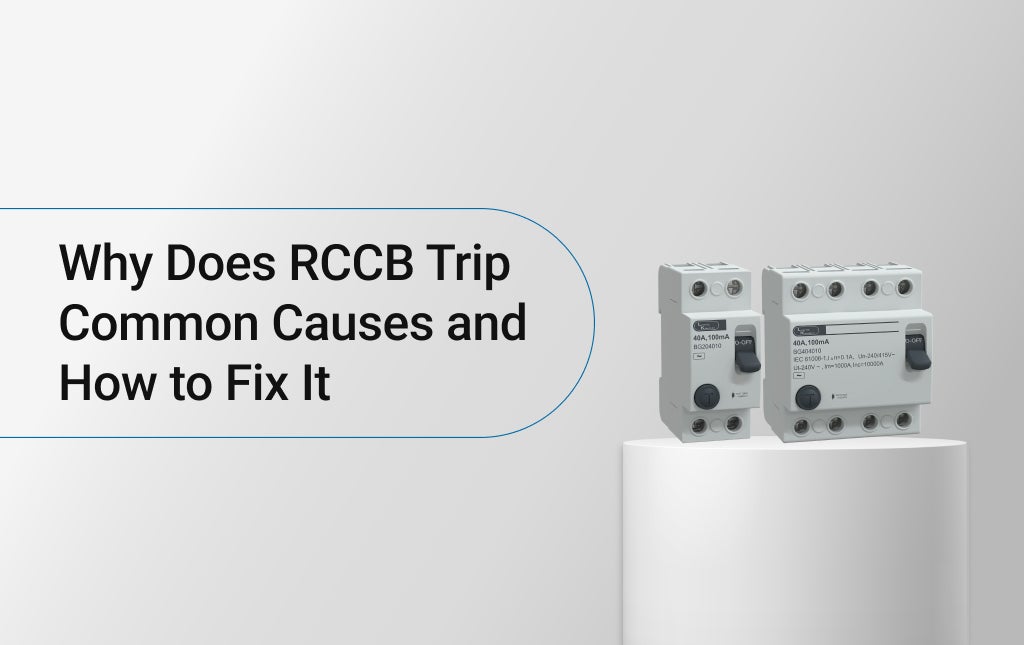
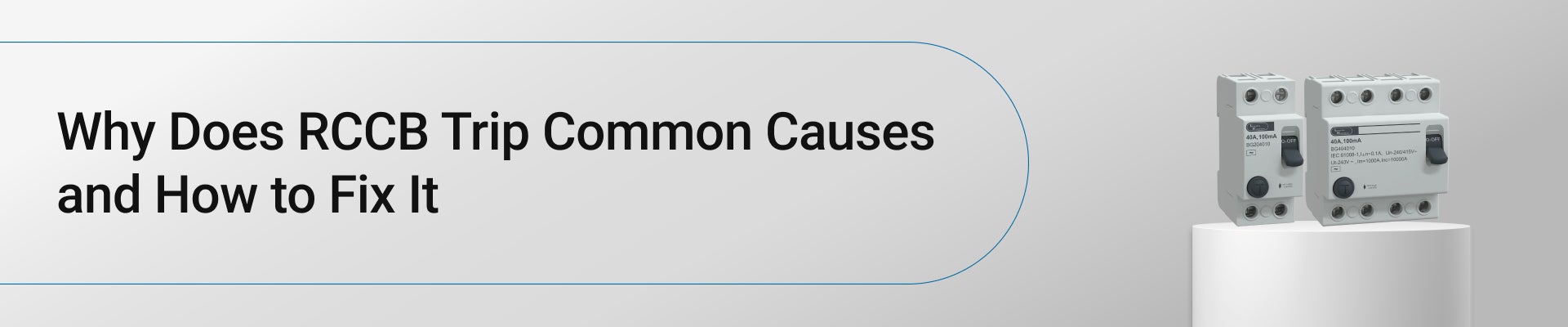
Why Does RCCB Trip? Common Causes and How to Fix It
You’re in the middle of something, maybe working, cooking, or just relaxing, and suddenly the power cuts off. You check the panel, and there it is. The RCCB has tripped. It’s frustrating, no doubt. But here’s the thing, an RCCB doesn’t trip randomly. It trips for a reason, and most of the time, that reason is safety. If you’ve been wondering why does rccb trip or are dealing with frequent interruptions, this guide will help you understand what’s really happening and how to fix it.
Table of Contents
- What is RCCB and Why Is It Important?
- Why Does RCCB Trip?
- Common RCCB Tripping Reasons
- Understanding RCCB Tripping Range and Time
- RCCB Tripping Problems You Shouldn’t Ignore
- How to Fix RCCB Tripping Issues
- RCCB vs MCB Tripping: Don’t Get Confused
- Preventing RCCB Tripping in the Future
- How Lauritz Knudsen Smartshop Helps Ensure Electrical Safety
- Conclusion
- FAQ About RCCB Trip
What is RCCB and Why Is It Important?
Before getting into the causes, let’s quickly revisit what is rccb. An RCCB (Residual Current Circuit Breaker) is a safety device that protects against electric shock and leakage current. It works by detecting any imbalance between the live and neutral current. If even a small leakage is detected, the RCCB immediately cuts off the power supply.
Why does this matter?
Because leakage current can:
- Cause electric shocks
- Lead to fire hazards
- Damage electrical equipment
So, while it may feel like an inconvenience, an RCCB tripping is actually a protective response.
Why Does RCCB Trip?
Let’s get straight to the main question: Why does rccb trip? An RCCB trips when it detects leakage current beyond its safe limit. Typically, this limit is around 30mA for residential systems. But what causes this leakage?
Common RCCB Tripping Reasons
There are several reasons for rccb tripping, and identifying the exact one is key to fixing the issue.
1. Leakage Current from Appliances
Faulty appliances are one of the most common causes.
- Damaged insulation
- Moisture inside devices
- Aging components
All of these can cause current to leak to the ground, triggering the RCCB.
2. Wiring Issues
Poor or damaged wiring can cause leaks.
- Exposed wires
- Loose connections
- Improper installation
These issues often go unnoticed until the RCCB starts tripping frequently.
3. Moisture and Damp Conditions
Water and electricity don’t mix well.
In areas like:
- Bathrooms
- Kitchens
- Outdoor setups
Moisture can create leakage paths, leading to RCCB trips.
4. Overloaded Circuits
While RCCB is not designed for overload protection (that’s the job of MCB), heavy loads can still indirectly cause leakage issues. This is where confusion between the MCB tripping and RCCB tripping often happens.
- MCB tripping: Caused by overload or short circuit
- RCCB tripping: Caused by leakage current
5. Faulty RCCB
Sometimes, the problem isn’t the system, it’s the RCCB itself.
- Internal component failure
- Wear and tear over time
- Manufacturing defects
If everything else checks out, the RCCB may need to be replaced.
6. RCCB Tripping Without Load
One of the more confusing situations is an RCCB tripping without a load. Even when no appliances are running, the RCCB trips. Possible reasons:
- Hidden leakage in wiring
- Neutral-to-earth faults
- Internal RCCB issues
This usually requires professional inspection.
Understanding RCCB Tripping Range and Time
To properly diagnose issues, you need to understand two key aspects:
RCCB Tripping Range
The RCCB tripping range refers to the leakage current level at which the RCCB activates. For homes, this is usually:
- 30mA (standard protection)
Higher ratings, such as 100 mA or 300 mA, are used in industrial setups.
RCCB Tripping Time
The rccb tripping time is the time it takes for the device to respond.
- Typically within milliseconds
- Fast response reduces the risk of shock or fire
A properly functioning RCCB reacts almost instantly.
RCCB Tripping Problems You Shouldn’t Ignore
Not all tripping is equal. Some rccb tripping problems indicate deeper issues:
- Frequent tripping without a clear reason
- Tripping only during specific appliance use
- Delayed or inconsistent tripping
- Tripping during rainy or humid conditions
These patterns help identify the root cause.
How to Fix RCCB Tripping Issues
Now comes the practical part: What can you actually do about it?
1. Identify Faulty Appliances
- Unplug all devices
- Reset the RCCB
- Plug appliances back in one by one
If the RCCB trips again, you’ve found the culprit.
2. Check Wiring
Look for:
- Loose connections
- Damaged insulation
- Burn marks
If you’re not experienced, it’s best to call an electrician.
3. Reduce Moisture Exposure
- Keep electrical panels dry
- Avoid water near outlets
- Use weatherproof fittings for outdoor setups
4. Test the RCCB Regularly
Using the rccb tripping test button:
- Press the test button on the RCCB
- It should trip immediately
- If it doesn’t, the device may be faulty
This simple test ensures your RCCB is functioning correctly.
5. Replace Faulty RCCB
If the device itself is the issue, replacement is the only solution. Always choose a reliable, certified product to ensure proper protection.
RCCB vs MCB Tripping: Don’t Get Confused
A lot of people mix up RCCB and MCB behaviour.
RCCB Tripping:
- Caused by leakage current
- Protects against electric shock
MCB Tripping:
- Caused by overload or short circuit
- Protects wiring and appliances
Understanding this difference helps in diagnosing the issue correctly.
Preventing RCCB Tripping in the Future
Prevention is always better than troubleshooting.
Best Practices:
- Use high-quality electrical components
- Avoid overloading circuits
- Keep wiring well-maintained
- Install proper earthing systems
- Schedule periodic inspections
These steps reduce the chances of unexpected tripping.
How Lauritz Knudsen Smartshop Helps Ensure Electrical Safety
Electrical safety isn’t just about fixing problems; it’s about preventing them in the first place. Lauritz Knudsen Smartshop offers a range of advanced RCCBs and protection devices designed for modern electrical systems. These products are built to detect leakage accurately and respond instantly, ensuring reliable performance.
Whether you’re dealing with frequent RCCB tripping problems or upgrading your system, choosing dependable components makes a significant difference. Because when it comes to safety, there’s no room for compromise.
Also Read: MCB Tripping: Causes, Troubleshooting, and Prevention
Conclusion
So, why does RCCB trip?
It’s not random. It’s a signal; something in your electrical system isn’t right. From faulty appliances and wiring issues to moisture and internal defects, there are multiple reasons for RCCB tripping. The key is identifying the cause and addressing it properly.
An RCCB is designed to protect you, and every time it trips, it’s doing exactly that. Understanding how it works, how to test it, and how to fix issues ensures that your electrical system stays safe, stable, and reliable.
FAQ About RCCB Trip
Q. Why does RCCB trip frequently in my home?
Ans. Frequent tripping usually indicates leakage current from faulty appliances, damaged wiring, or moisture exposure. Understanding why the RCCB trips helps identify the root cause. Start by checking appliances and wiring, and if the issue persists, consult an electrician.
Q. What are the most common RCCB tripping reasons?
Ans. The most common reasons for RCCB tripping include appliance leaks, wiring faults, moisture, and internal RCCB issues. Identifying patterns in tripping can help pinpoint the exact problem.
Q. What is RCCB tripping without a load?
Ans. RCCB tripping without a load happens when the RCCB trips even with no appliances running. This is usually due to hidden wiring faults, neutral-to-earth leakage, or a defective RCCB.
Q. How to perform an RCCB tripping test?
Ans. The rccb tripping test involves pressing the test button on the device. If it trips immediately, it’s working correctly. If not, it may need to be replaced.
Q. What is the difference between RCCB and MCCB tripping?
Ans. RCCB tripping occurs due to leakage current, while MCCB tripping occurs due to overload or short circuit. Both serve different safety purposes and should not be confused.
Comments